Coffee Spew

  • About
  • Cambridge Book Review
  • Cambridge Book Review Press
  • Selected Reviews

  • Two by Joan Frank

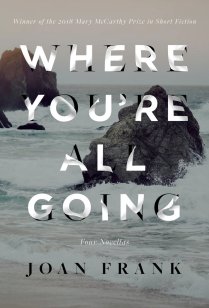
    Where You’re All Going
    Four Novellas
    Joan Frank
    Sarabande Books 2020

    Try to Get Lost
    Essays on Travel and Place
    Joan Frank
    University of New Mexico Press 2020

    Reviewed by Bob Wake

    The publication of two new books from writer Joan Frank offers readers a not-to-be-missed opportunity to experience the range of her literary gifts. The four novellas in Where You’re All Going demonstrate the author’s eye for observational and psychological detail. Frank’s characters, no matter their documented flaws or shortcomings, are often mesmerized and transported by music and art. A character swooning in revery describes jazz singer Johnny Hartman as having a “blackberry-syrup voice.” Viewing portraiture by the painters Thomas Eakins and John Singer Sargent is “like a form of time travel.” Observational and psychological detail are also the qualities that bring an immersive richness to her travel essays in Try to Get Lost. She spurs herself, and all of us, to follow “Henry James’s injunction—to be someone on whom nothing is lost.” While adding, with the flinty wisdom of a seasoned traveler, “Understand you will continue to fail spectacularly at this.” (“Resolve it anyway,” she advises.)

    Frank.Going

    Frank’s well-received 2017 novel, All the News I Need, introduced us to one of the most memorable characters in recent literature. Splenetic, yet fulsomely life-affirming, Frances “Frannie” Ferguson. Frannie reappears in Where You’re All Going, in the novella “Open Says Me.” Retired and unmoored in Northern California since the death of her husband, Frannie marks time, literally, singing and performing with a local choral group. Music sustains her. Buoys her. (“Melodies like currents, pushing away everything that is not them.”) Deliriously profane. “Christ on a cracker,” is a milder locution. An imbiber of whatever’s on hand, such as diet ginger ale laced with “long quantities of Cuervo Gold.” Frannie’s attraction to a thirty-something D.J. is fueled less by alcohol and poor judgment than enthrallment to their shared deep-cut knowledge of American pop music. She invites the D.J. to a choral concert and an after-show meet-up. Humiliation and self-loathing ensue. A children’s park train is involved. The story’s final image is grotesque, wistful, and wildly hilarious all at once.

    Writer Richard Ford, in his introduction to The Granta Book of the American Long Story, tells us that novellas (typically running between sixty and a hundred and twenty pages in length) are “nicely suited to stories of character disintegration.” Frank deploys this trajectory with skill. As well as its opposite: characters circuitously winding their way toward wisdom and insight. In Frank’s novella “Biting the Moon,” the narrator shares memories of her romance years ago with a celebrity composer. The story grows increasingly fraught as she recalls drunken and abusive behavior from him. Her memories shift and mature as she confronts and interrogates them. Joan Frank’s novellas crystalize the passage of time in profound ways. The final two stories in Where You’re All Going, “Cavatina for Passenger X” and the title novella, channel Chekhov in their microcosmic portraits of community, friendship, marriage. (“Every marriage contained the seeds of its own end, happy and unhappy in almost equal measure until, by whim or accretion, the balance tipped.”)

    Frank.Lost

    Impersonal travel essays are nowhere to be found in Frank’s deeply personal collection of travel essays, Try to Get Lost. She is blessedly blunt about this turbulent era “of perhaps the most frightening protofascist ever to assume office in American history.” Her essay “Red State, Blue State” is a Baedeker for bad times. Survival strategies include everything from exercise to charity work to “you drink.” Pulling up stakes is an option, not a panacea. “Travel beats us up,” she admits in “Shake Me Up, Judy.” “Sleep’s elusive. Stress is amped.” Her sketches of European cities benefit enormously from shoe leather reporting (and the accompanying shin splints). The verisimilitude is breathtaking. Shop windows in Italy (“In Case of Firenze”) inspire a cinematic cascade of history and culture:

    Itemize what you see: dusty, crumbling books, violins and mandolins, vases and dishes, forged bells, paintings from centuries-old flea markets, maps, inscrutable scientific instruments, decrepit birdcages, flags, buttons, globes, chess sets, rusting anchors, pulp paperbacks in multiple languages, bed-frames, empty bottles, belts, sconces, trays, mirrors, cracked pages from old botanical texts of hand-tinted prints torn out and framed. Etchings and woodcuts. Bad art. Bad furniture. Exquisite art. Exquisite furniture, draped with insanely expensive tapestries. Chandelier crystals. Kitchen appliances. Living room sets. Faience. Crates of tarnished, unmatched jewelry. Gilt sculpture. Murano glass. Religious icons. Life-sized statuary. Broken toys, cheesecake photos, unclassifiable objets from the 1950s. Wooden clocks painted in garish designs, pendulums ticking away.

    “Place becomes, finally, the only subject,” she writes in “The Where of It.” “Place is identity, style, faith, cosmology.” Joan Frank’s own story is threaded throughout Try to Get Lost. “Cave of the Iron Door” is a searing essay about hard family memories evoked on returning after many years to her childhood home in Arizona. “Here was the original world,” she writes. “Your big bang.” Sadnesses endure. They travel with us. A lost museum ticket on a trip to Germany in “Little Traffic Light Men” triggers a welling up of grief for her recently deceased sister. (“Here’s a fact I can offer with authority: it is very hard to find places in a museum’s rooms where you can cry in privacy. Corners seem to work best, if you face into them.”) Try to Get Lost is superb travel literature. It might also be one of the best memoirs you’ll read this year.

    February 22, 2020
    All the News I Need, Anton Chekhov, Henry James, Joan Frank, John Singer Sargent, Johnny Hartman, Mary McCarthy Prize in Short Fiction, River Teeth Literary Nonfiction Prize, Sarabande Books, Thomas Eakins, Try to Get Lost, University of New Mexico Press, Where You’re All Going

  • In the Land of Men

    In the Land of Men
    Adrienne Miller
    HarperCollins 2020

    Reviewed by Bob Wake

    AdrienneMiller

    An instant classic. Adrienne Miller was the fiction editor at Esquire magazine in the late-90s when she was still in her twenties. Crossed paths with Mailer, Updike, Bret Easton Ellis, Dave Eggers, and, the real subject of her book, David Foster Wallace, whom she edited (some of his best short stories appeared in Esquire, including “Adult World (I),” “Adult World (II),” and “Incarnations of Burned Children”), and with whom she shared a romance, off and on, for several years. It’s something of a lurid tell-all (one review is titled “Infinite Jerk”), but offers lots more about the era, its literature, its sexism, and the rise and fall of glossy magazine publishing at a time when the Internet was just taking hold. Miller chose not to talk with D.T. Max for his biography of Wallace, so the material presented here is largely uncharted and eye-opening. Her respect for Wallace as a writer is worshipful. The mind games she endured during their wildly complicated relationship are jaw-dropping. The richest, fullest portrait of David Foster Wallace that has so far appeared in print. Highly recommended.

    February 16, 2020
    Adrienne Miller, Adult World (I), Adult World (II), Bret Easton Ellis, D.T. Max, Dave Eggers, David Foster Wallace, Esquire Magazine, In the Land of Men, Incarnations of Burned Children, John Updike, Norman Mailer

  • Flights

    Flights
    Olga Tokarczuk
    Translated by Jennifer Croft
    Riverhead Books 2018

    Reviewed by Bob Wake

    The risk reward ratio can be perilous for both reader and writer when embarking on something nebulously described as a “fragmentary novel.” Flights is a win-win. Olga Tokarczuk builds her novel thematically. “Constellation, not sequencing, carries truth,” she writes. Disparate narrative pieces cohere around the theme, or constellation, of travel and dislocation. One strand tells a mystery that unfolds like an Antonioni film. A husband grows frantic when his wife and son fail to return from a morning walk during a family vacation on the Croatian island of Vis. The story line itself disappears for pages at a time while other narrative threads emerge. Later, the mystery returns with the husband searching photographic evidence for signs and clues.

    flights

    There are deadpan sections of Flights outlining in utterly plausible detail an academic pursuit referred to as travel psychology, whose practitioners meet in airports for their conferences and workshops. “Practical travel psychology investigates the metaphorical meaning of places,” we’re told. Another recurring element of Flights investigates the human body itself as a landscape of infinite inward exploration. The history of phantom pain and the embalming of bodies for medical study are discussed at length. The encyclopedic flurry of anatomical and geographical info must have presented a challenge for Jennifer Croft, who translated the novel with evident eloquence from Olga Tokarczuk’s Polish. No surprise that Croft shared with Tokarczuk the 2018 Man Booker International Prize for Flights. A masterful literary work that feels like a contemporary classic in the making.

    September 7, 2019
    Flights, Jennifer Croft, Man Booker International Prize, Olga Tokarczuk, Riverhead Books

  • The Exchange & Other Stories

    The Exchange & Other Stories
    Yuri Trifonov
    Translators: Ellendea Proffer, Helen P. Burlingame,
    Jim Somers, and Byron Lindsey 
    Northwestern University Press 2002

    Reviewed by Bob Wake

    Yuri Trifonov (1925-1981) was a mainstream Soviet writer whose work grew increasingly subversive during the 1960s and 70s. Remarkably, a celebrated novella like “The Exchange” walked a surgically fine line that kept him from being banned or censored as a dissident. Trifonov seems to have accomplished this by focusing on the moral dilemmas and frustrations of his characters, whose limitations make them appear less victims of an oppressive state than flawed and sometimes foolish careerists oblivious to the political compromises that define their lives. 

    Call it a brilliant authorial head-fake. To understand the insanely deft mechanics of Trifonov’s fiction—and his clever use of third-person intimate narration—is to appreciate why he was a contender for the Nobel Prize in Literature. “The Exchange” (1969) is a stark depiction of a quarrelsome Moscow family scheming to game the rigid Soviet bureaucracy controlling the housing shortage. (There are as many sinister acronyms in “The Exchange”—OZHK is the General Housing Commission—as a David Foster Wallace story.) A dying relative is used as a pawn to barter for a larger living space, with the idea that the relative will soon die leaving an additional empty room for the downsized family to occupy.

    John Updike was particularly fond of Trifonov’s novella “The Long Goodbye” (1971), also included here. The story charts an unconventional marriage between an up and coming Moscow actress and her struggling writer husband. Less overtly political than “The Exchange” (although the residency permits required for government housing reappear as a bureaucratic headache), it nevertheless was met with criticism for its harsh naturalism suggestive of a generational post-revolutionary moral rot in place of idealized socialist realism. Updike admired the story’s complex Chekhovian characters, surprising psychological depth, and Trifonov’s trademark urban melancholy. “Indeed,” writes Updike in his 1978 review of “The Long Goodbye,” “under the iron skies of their governments the Russians have nowhere to look for amusement and mercy but toward one another.” (Updike’s review can be found in his 1983 collection of essays and criticism, Hugging the Shore.)

    Rounding out the volume are two brief autobiographical sketches. “Games at Dusk”(1968) recalls Trifonov’s Moscow youth as an eleven-year-old tennis fan obsessed with the players at a public tennis court (shades, once again, of David Foster Wallace). “A Short Stay in the Torture Chamber” (1986) is especially powerful in dealing with the author’s tragic familial history: Trifonov’s father was executed during the Stalinist purges of 1938. Although his father’s reputation was rehabilitated in the 1950s, a former schoolmate of Trifonov’s tried to sabotage the author’s budding literary career by charging he’d lied about his father’s past. The “torture chamber” of the story’s title is actually a tourist site in a Medieval Austrian castle where Trifonov confronts his slanderous ex-friend when they were both visiting the region as sports journalists.

    June 23, 2019
    Byron Lindsey, Ellendea Proffer, Helen P. Burlingame, Hugging the Shore, Jim Somers, John Updike, Northwestern University Press, The Exchange & Other Stories, Yuri Trifonov

  • Interior States


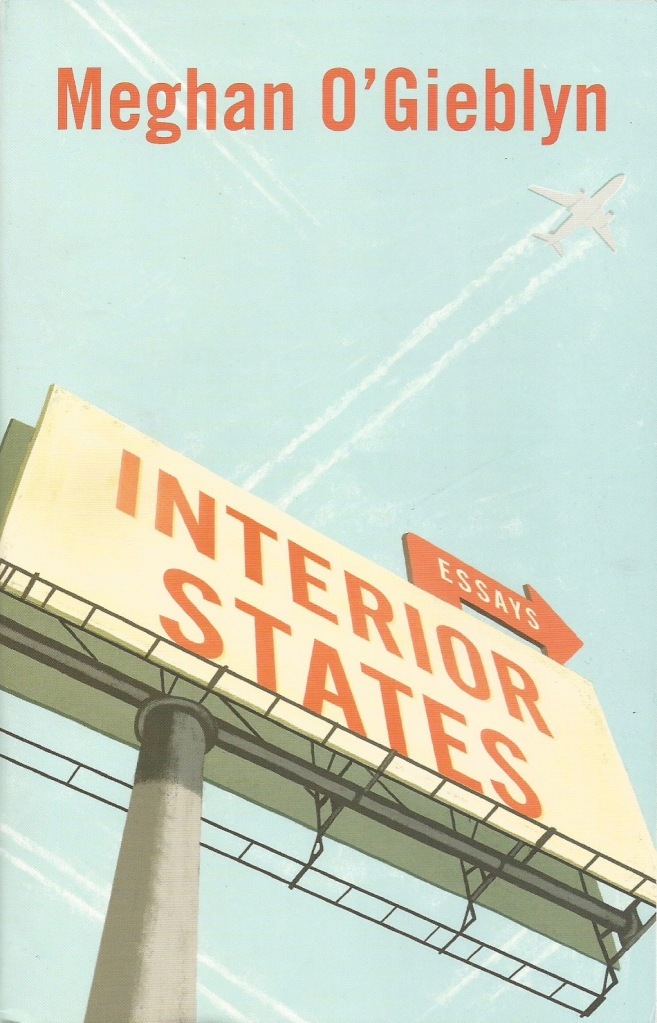
    My review of Meghan O’Gieblyn’s debut collection of essays, Interior States, appears in the Winter 2019 issue of Wisconsin People & Ideas.

    March 4, 2019
    Anchor Books, essays, Interior States, Meghan O’Gieblyn, Wisconsin People & Ideas

  • Mudstone

    Thrilled and honored that my short story “Mudstone” won First Place in this year’s Wisconsin People & Ideas fiction contest. The story will appear online and in print next month in their summer issue. [Update 7/18/17: “Mudstone” can be read online here.]

    2017_contest_webslide

    June 8, 2017
    Ann Zindler, Bob Wake, Georgia Ressmeyer, Hansa Kerman Pistotnik, Jeff Esterholm, Nicholas Gulig, Wisconsin People & Ideas, Wisconsin People & Ideas 2017 Writing Contest

  • Rosebud 62

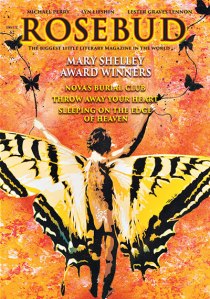
    Issue62

    Rosebud 62 has arrived! There’s much to celebrate, beginning with Tai Taeoalii, the American/Samoan artist and filmmaker whose pop art surrealism graces the front and back cover as well as appearing generously throughout the issue. “These are deep waters, in which thought and feeling morph in mysterious ways,” writes Rosebud editor Rod Clark in his interview with the artist, whose work is both fanciful and nightmarish. Just like the five winning short stories in the magazine’s sixth biennial Mary Wollstonecraft Shelley Award for Imaginative Fiction. Taking first place and $1,000 is Patricia Lundy’s gothic horror tale, “Nova’s Burial Club.” Lundy will disturb your sleep with sentences like this: “I found her face down at the table, her hair dipping into the meat sauces.”

    Readers of Rosebud 62 are also treated to the first two chapters from a new novel, James Joyce 1906-1907: The Ambiguity of Epiphanies, by Giuseppe Cafiero, and translated from the Italian by Simon Knight. A kind of noirish psychological study of Joyce and his work, the excerpt is narrated by a private detective hired by a publisher to shadow the modernist writer whose “incorrigible arrogance and effrontery” have given birth to stories that “dwell on matters not acceptable in polite society, possibly unlawful and certainly deserving of disapproval.”

    Further rounding out issue 62: poems from Lyn Lifshin (“Remembering Later it’s the Anniversary of When My Mother and Father Eloped”), Lester Graves Lennon (“Uncle Scott”), and George Eastburn (“More than Ferlinghetti or Ginsberg”); writer and cartoonist P. S. Mueller’s apocalyptic meetup with God in “The Big Shiny” (“When God spoke, he really did sound like Orson Welles bellowing into a highly amplified public address system centered in a tiled men’s room the size of an airplane hangar”); and Mike Baron’s “Trail of the Loathsome Swine,” a scabrous Southern Gothic short story uniquely tailored for the Age of Trump (“Only time I ever had any truck with ’em animal rights people was in the sixth grade, they got permission to come to our school and try to frighten the bejesus out of us with pictures of slaughterhouses and chickens in cages and such”). Oh, there’s more. So much more.

    Writers take note: Also included in Rosebud 62 are the guidelines for the ninth biennial X. J. Kennedy Award for Creative Nonfiction. Deadline for submissions is August 15, 2017. I’m pleased to say I’ll be co-judging this year’s contest entries with editor Rod Clark.

    March 15, 2017
    George Eastburn, Giuseppe Cafiero, James Joyce, Lester Graves Lennon, Lyn Lifshin, Mike Baron, Orson Welles, P.S. Mueller, Patricia Lundy, Rod Clark, Rosebud 62, Simon Knight, Tai Taeoalii

  • All the News I Need

    All the News I Need
    Joan Frank
    University of Massachusetts Press 2017

    Reviewed by Bob Wake

    allthenews

    Joan Frank’s fourth novel, All the News I Need, winner of the 2016 Juniper Prize for Fiction from the University of Massachusetts Press, is a deep dive into the heart of friendship, of memory and regret, of aging and loss. Frances Ferguson, former newspaper columnist and book reviewer, is widowed after sixteen years of marriage. She’s fifty-eight and living alone in the novel’s lushly depicted wine region of Northern California. Oliver Gaffney, retired San Francisco preschool teacher, is gay and single at sixty-two. He’s prone to fatalism and panic attacks.

    Human beings getting on one another’s nerves. Joan Frank has long been a master at showing how the best among us can entertain on occasion the worst of thoughts. All the News I Need is told through vivid third-person intimate narration that toggles between Frances and Oliver. Fran and Ollie. Ollie was close friends with Fran’s late husband, Kirk. The friendship between Fran and Ollie, minus Kirk, is iffy. By Ollie’s estimation:

    Fran practices survivor manners, which is to say, none. She plunks her shod feet on the dining table, laughs with a honk, swears graphically, drinks wine chased by beer from the bottle—lifted high with each swig, as if she were taking aim with a spyglass.

    The centerpiece of the novel is a life-shifting excursion to Paris undertaken by Fran and Ollie at Fran’s instigation. They will visit sights she remembers from previous trips with her late husband. There will be mishaps. (“Travel beats the living shit out of you,” Fran at one point muses in italicized exhaustion.) Fran and Ollie will each have opportunities to bless one another with kindness, even share moments of transcendence, while still wondering privately what the hell is wrong with the other person. (“Ollie’s insane, but that was never exactly a revelation,” Fran tells herself.) At unexpected moments the city erupts with a kind of quotidian sensuality and grace:

    They march to the Place des Vosges, through the shadowy arched entry into the pale sunlight of the square: a time-travel portal. Once through, they stop and stare. Sounds issue at them: splashing water from the fountain, echoes from the cool arcades surrounding the lawn, the demure trees: chatter, music, scents of coffee and roasting meats and fresh bread and perfume, laughter. Couples strewn on the grass, entwined, twirling strands of each other’s hair; mothers and nannies trail young charges who lurch around shrieking, arms in the air, just as they do at the park at home.

    At an outdoor Paris cafe, Ollie recalls the AIDS epidemic that took so many of his friends, years during which “he kept two funeral suits in his closet.” Fran talks openly about “the targeted feeling” of sexual harrassment that “never stopped, in one form or another, until, oh, my forties.” Scenes like this give All the News I Need an unvarnished sense of what human dignity under assault looks like and feels like. The relevance is unmistakable. This is not fake news.

    “Nobody gives a fuck what we saw or what we ate,” says Fran in morose anticipation of their return home. There will be redemptive and wholly satisfying surprises to come. Joan Frank has gifted us with two unforgettable characters in a novel filled to bursting with hard truths and shimmering beauty.

    February 9, 2017
    2016 Juniper Prize for Fiction, All the News I Need, Joan Frank, University of Massachusetts Press

  • The Mysterious Location of Kyrgyzstan

    The Mysterious Location of Kyrgyzstan
    David Allan Cates
    Satellite Press 2016

    Reviewed by Bob Wake

    CatesPoemsDavid Allan Cates, the author of five novels (most recently the award-winning Tom Connor’s Gift), has not until now published a collection of his poetry. The assured voice that emerges from the nineteen poems in The Mysterious Location of Kyrgyzstan shares a sensibility that admirers of his fiction will recognize: politically engaged, erotically charged, and remarkably fluid in shifting between closely observed naturalism (especially of Central America, where Cates does medical aid work) and dreamlike surrealism.

    If a lovesick Claude Monet were inspired to peel off his paint smock and dive naked into his beloved water lilies, he might sound something like the besotted narrator of Cates’s poem, “You Could Have Had Me”: “Just so you know, I’ve taken to floating on the fish pond at night / My cock a lily // Chest an empty / Turtle shell without you.” The playfulness of “You Could Have Had Me” comes at a price. There is regret that stings (“The echoing howl of everything I did and everything / I didn’t do”) and an immeasurable sadness (“Then I close my eyes and smell precious / Failure, / Feel on my skin the electric rain / Of bewilderment”).

    Love in a Cates poem can be life and death. In “The Purpose of Kissing,” sensuality has the explosive charge of a suicide-bomb trigger:

    Think of it like this: lovers
    hold tiny detonation devices
    on their tongues, hot invisible
    wires attached to distant charges
    strategically placed.

    Real-world violence is often right around the corner in Cates’s work. In the poem “San Pedro Sula,” for instance, “Nothing says good morning / like gunshots at dawn, and she, her feet in snow, / steps past pine and hemlock toward a cold car / she hopes will start.” To situate love honestly in the historical moment is to recognize both our fragile impermanence and our connectedness to landscapes alive with ghosts: “Some / were important and others weren’t / and were slaughtered / because they lived on the other side of the river / or down in the valley … Sometimes / they loved— / did I mention that?—like we do” (“You and Me and the Dead”).

    It is David Allan Cates’s novelistic eye for detail and the sinister anecdote that breathes so much life into the opening two stanzas of a poem like “What with Light We Might Imagine”:

    Before dawn, you greet hotel maids
    chatting music, step around dog shit
    on the clean cobbled sidewalk past garbage
    trucks and taxis in the cold. After
    a long night of righteous missiles
    over the holy land, the echo of ¡puta
    madre! has dissolved down the block
    and the fairy glow of streetlights guides
    you toward a paling sky, Cinco de Mayo
    and coffee.

    Still squinting from the Santa Martha
    bus, you walk into the shade past armed
    guards on broken chairs and the same
    one who blocked your way to leave that first
    afternoon, said it’s too late, you’ll have to stay
    the night inside. Remember the dark
    in your throat, the sudden glint in his eye,
    a prison joke. Ha-ha.

    The Mysterious Location of Kyrgyzstan is an ambitious all-digital project (available in Kindle, Nook, Kobo, iBooks, and Smashwords editions) from Satellite Press. Filmmakers were commissioned by the Satellite Collective to create videos using audio of Cates reading. Two online videos have appeared so far, the title poem (by filmmakers Tim van der Meer and Sietske van der Veen) and the poem “Good Luck” (by filmmaker Kate MacDonald).


    April 8, 2016
    David Allan Cates, Kate MacDonald, Satellite Collective, Satellite Press, Sietske van der Veen, The Mysterious Location of Kyrgyzstan, Tim van der Meer, Tom Connor’s Gift

  • Rosebud 60

    issue60Rosebud 60 (Fall/Winter 2015) is a beauty. There’s the joyous cover art by featured artist Toni Pawlowsky. Inside, for starters, you’ll find all five winning essays in Rosebud’s eighth biennial X. J. Kennedy Award for Nonfiction (which I had the pleasure of co-judging with editor Rod Clark): Grand Prize winner Chris Ellery (“A Boy of Bethany”), and runners-up Jennifer Arin (“Adrián de Sevilla”), Katherine Baker (“No Gas, No Soap in Cuba”), Joan Frank (“The Where of It”), and Brett Alan Sanders (“Attractions of Barbarity, or Dreaming a Complete Argentina”). The winning essays this year are international in scope with timely and thought-provoking visits to Jerusalem, Paris, Havana, and Buenos Aires.

    There’s much more goodness to unpack in Rosebud 60, from poetry by Thomas Merton, Lawrence Ferlinghetti, and Thich Nhat Hanh, to the “medical science fiction” of Dr. Tatsuaki Ishiguro (“The Hope Shore Sea Squirt”). Even a graphic short story (“What Is” by Mort Castle) illustrated by Weshoyot Alvitre. And we’re still only scratching the surface. Regular features include top-of-their-game work from Rod Clark, P. S. Mueller, and Rick Geary. Guest art director Kathy Sherwood (filling in for Parnell Nelson, sidelined with health concerns, but returning for Rosebud 61) has given the magazine a sleek presentation.

    December 4, 2015
    Brett Alan Sanders, Chris Ellery, Dr. Tatsuaki Ishiguro, Jennifer Arin, Joan Frank, Katherine Baker, Kathy Sherwood, Lawrence Ferlinghetti, Mort Castle, P.S. Mueller, Parnell Nelson, Rick Geary, Rod Clark, Rosebud, Thich Nhat Hanh, Thomas Merton, Weshoyot Alvitre

Previous Page Next Page

Blog at WordPress.com.


Loading Comments...
 

    • Subscribe Subscribed
      • Coffee Spew
      • Join 55 other subscribers
      • Already have a WordPress.com account? Log in now.
      • Coffee Spew
      • Subscribe Subscribed
      • Sign up
      • Log in
      • Report this content
      • View site in Reader
      • Manage subscriptions
      • Collapse this bar