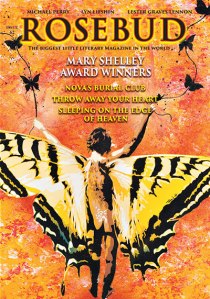
Rosebud 62 has arrived! There’s much to celebrate, beginning with Tai Taeoalii, the American/Samoan artist and filmmaker whose pop art surrealism graces the front and back cover as well as appearing generously throughout the issue. “These are deep waters, in which thought and feeling morph in mysterious ways,” writes Rosebud editor Rod Clark in his interview with the artist, whose work is both fanciful and nightmarish. Just like the five winning short stories in the magazine’s sixth biennial Mary Wollstonecraft Shelley Award for Imaginative Fiction. Taking first place and $1,000 is Patricia Lundy’s gothic horror tale, “Nova’s Burial Club.” Lundy will disturb your sleep with sentences like this: “I found her face down at the table, her hair dipping into the meat sauces.”
Readers of Rosebud 62 are also treated to the first two chapters from a new novel, James Joyce 1906-1907: The Ambiguity of Epiphanies, by Giuseppe Cafiero, and translated from the Italian by Simon Knight. A kind of noirish psychological study of Joyce and his work, the excerpt is narrated by a private detective hired by a publisher to shadow the modernist writer whose “incorrigible arrogance and effrontery” have given birth to stories that “dwell on matters not acceptable in polite society, possibly unlawful and certainly deserving of disapproval.”
Further rounding out issue 62: poems from Lyn Lifshin (“Remembering Later it’s the Anniversary of When My Mother and Father Eloped”), Lester Graves Lennon (“Uncle Scott”), and George Eastburn (“More than Ferlinghetti or Ginsberg”); writer and cartoonist P. S. Mueller’s apocalyptic meetup with God in “The Big Shiny” (“When God spoke, he really did sound like Orson Welles bellowing into a highly amplified public address system centered in a tiled men’s room the size of an airplane hangar”); and Mike Baron’s “Trail of the Loathsome Swine,” a scabrous Southern Gothic short story uniquely tailored for the Age of Trump (“Only time I ever had any truck with ’em animal rights people was in the sixth grade, they got permission to come to our school and try to frighten the bejesus out of us with pictures of slaughterhouses and chickens in cages and such”). Oh, there’s more. So much more.
Writers take note: Also included in Rosebud 62 are the guidelines for the ninth biennial X. J. Kennedy Award for Creative Nonfiction. Deadline for submissions is August 15, 2017. I’m pleased to say I’ll be co-judging this year’s contest entries with editor Rod Clark.
1997 Northwestern Univ. Press edition of Ashes and Diamonds.
The 1948 Polish novel Ashes and Diamonds by Jerzy Andrzejewski (1909-1983) is probably less appreciated today as a literary work in its own right than as the basis for Andrzej Wajda’s 1958 film adaptation. The wildly entertaining movie, designated an “Essential Art House” choice in Criterion’s DVD catalog, owes more to Orson Welles’s baroque cinematic influence than Andrzejewski’s blend of socialist realism and tragic irony. Both novel and film are compact (239 pgs./103 mins.), while at the same time reflecting a panoramic near-epic cross-section of Poland’s clashing societal and political factions at the close of the Second World War. Neither the novel nor the film have escaped criticism over the years, although for different reasons.
Poet Czeslaw Milosz (1911-2004), who defected from Communist Poland in 1951, wrote a scathing smackdown of his former friend Jerzy Andrzejewski in The Captive Mind (1953), the Nobel Prize-winning poet’s classic study of writers and intellectuals “adapting” themselves to totalitarian regimes. Milosz—who refers to Andrzejewski pseudonymously as “Alpha, the Moralist”—is especially tough on what he sees as pulled-punches in Ashes and Diamonds (discussed at length in The Captive Mind without mentioning the novel’s title). According to Milosz, the novelist was nicknamed “the respectable prostitute” by fellow-writers who saw Andrzejewski as a Stalinist suck-up.
Zbigniew Cybulski in Andrzej Wajda’s Ashes and Diamonds (1958)
Film director Andrzej Wajda, in a fascinating interview included on the Ashes and Diamonds Criterion DVD, talks candidly of having initially refused to read the novel because of its state-sanctioned popularity in the 1950s. In the notes to a 2007 translation of Andrzejewski’s earlier novel, Holy Week, commentator Oscar Swan writes: “The year 1954 found Andrzejewski politically sanitizing a new edition of Ashes and Diamonds, which had become required reading in the schools.”
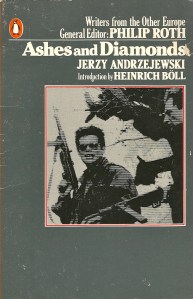
1980 Penguin paperback edition of Ashes and Diamonds.
German writer Heinrich Böll (1917-1985), like Milosz a recipient of the Nobel Prize for Literature, is altogether kinder to Ashes and Diamonds in his introduction written for the 1980 Penguin “Writers from the Other Europe” paperback edition of the novel, and reprinted in the 1997 Northwestern University Press edition. Almost as an aside, Böll notes that “the reader feels” that Andrzejewski “has a sense of kinship” with the novel’s “young Socialist and Communist functionaries.”
While both the Penguin and NUP editions of Ashes and Diamonds use D. J. Walsh’s 1962 British translation (with its battle-hardened Polish adults and nihilistic teenagers alike saying “cheerio” and “bloke” and “rotter” to one another), only the NUP edition includes five pages of previously deleted text. No explanation is given as to whether this was perhaps material removed by censors or, more likely, added in later to placate censors (possibly for the 1954 “sanitized” edition). A long speech by Stefan Szczuka, the sympathetically portrayed Communist Party official marked for assassination by the Polish underground, goes on and on for a mind-numbing two full pages of Soviet-era boilerplate:
For only those truly die who believe in isolation or who serve false truths which are illusory and incompatible with the one great truth of our time. Future generations will only despise them and will blame them or condemn them to oblivion. Those people, however, who have understood the forces of history and who have been in solidarity with their comrades, will discover in the future the praise of soldiers fighting for humanity, for one’s own fatherland and for mankind, for the world order.
Wajda sharpened the book’s edges by infusing the film with the Catholic iconography of Polish nationalism and by emphasizing the charged performance of Zbigniew Cybulski as the Home Army resistance fighter tasked with assassinating Szczuka. The combined effect was a cleverly coded rebuke to the postwar Soviet control of the country. Although the movie’s striking visual metaphors have sometimes been criticized as heavy-handed, the stylistic strategy clearly succeeded in Wajda’s intended aim of circumventing Communist Party censorship.
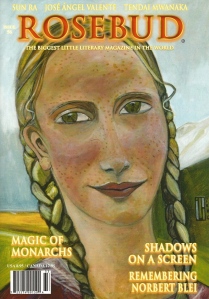
Rosebud 56 (Winter 2013/14) has arrived and it’s as strong an issue as editor Rod Clark has given us in twenty years of Rosebud goodness: From the vibrant nature-fueled Americana of featured Vermont artist Patricia LeBon Herb, to a selection of poetry from postwar Spanish writer José Ángel Valente newly translated by Thomas Christensen. Another must-read highlight is Rod’s Voice Over column, “Recuerdos: Guatamala 1976,” a harrowing first-person recounting of a notorious Latin American earthquake.
Film lovers will find a treasure trove in issue 56: “Shadows on a Screen,” a knowing coming-of-age short story by Thomas Fuchs, son of Hollywood screenwriter Daniel Fuchs (Criss Cross [1949]); Victor A. Walsh’s fascinating essay on Nellie Crawford (a.k.a. Madame Sul-Te-Wan), “Breaking the Color Barrier: Hollywood’s first African-American actress”; and Jack Lehman’s haunting “fictional autobiography,” “Orson Welles in Wisconsin.”
Also included are a pair of warm reminiscences of two iconic Wisconsin authors: Robert Zoschke’s “Norbert Blei (1935-2013): A writer with a capital ‘W,’” and Wisconsin State Journal columnist Doug Moe’s classic piece on Madison poet John Tuschen (1949-2005), “Poet is a Stranger in His Own Land.”
Believe me, I’m only scratching the surface of this issue (cf., P.S. Mueller’s illustrated exploration of Baby Boomer obsolescence, “Fader”; Rick Geary’s cheerfully sinister Afterwords comic, “My Home Town”). And, sure, let’s not forget to mention my short story, “Ty-D-Bol Blue,” which I’m delighted to see in print after first appearing online in last summer’s Cambridge Book Review.
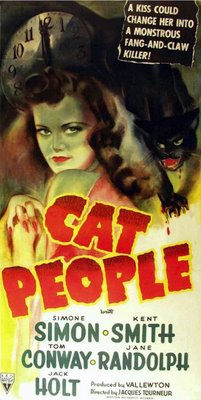
The original Cat People (1942), directed by Jacques Tourneur, is both an acknowledged classic of suggestive horror and one of the most famous Hollywood B-movies of all time. First in a series of low-budget RKO fright films produced by Val Lewton, Cat People became a surprise hit that saved the studio from near-bankruptcy following the failure of two iconic films that in their day were costly flops—Citizen Kane (1941) and The Magnificent Ambersons (1942)—directed by the mercurial boy-genius, Orson Welles. Lewton, while unpretentious by Wellesian standards, was no less hungry to make movies.
Cannily, Lewton found a creative path within the system by working fast and cheap. (And finding an economical use for abandoned sets like the ornate staircase from The Magnificent Ambersons that shows up in Cat People.) He’d been a deadline-driven journalist and pulp novelist. And before being offered his own production unit at RKO studios, Lewton worked his way up at MGM as an ambitious story editor and researcher. Cat People’s disquieting atmosphere of Old World otherness combined with New World dislocation can be traced in part to the European backgrounds of Lewton, born in 1904 in what is now Ukraine, and Tourneur, born the same year in France. The film evokes a haunted American melting pot of primitive mythologies and new-fangled superstitions (i.e., psychoanalysis) ill-equipped for securing one’s safety or survival in a modern impersonal cityscape. It should come as no surprise that after working with Val Lewton, director Jacques Tourneur (along with Cat People cinematographer Nicholas Musuraca) went on to make the influential film noir, Out of the Past (1947), which helped define the genre as doom-laden and populated with psychologically crippled outsiders and social misfits.
Cat People’s Irena Dubrovna (played by French actress Simone Simon) is an aspiring fashion designer of Serbian heritage living in New York City. Introspective and melancholic, she believes herself descended from a devil-worshipping were-leopard who survived an Eastern European witch-hunting pogrom in the 16th century. Irena finds herself drawn to the caged leopard in the Central Park Zoo. Her impromptu marriage to a marine engineer (Kent Smith) remains unconsummated because Irena fears that her own unleashed passion will destroy her husband just like, it’s implied, her mother may have killed Irena’s father in a sexual frenzy when Irena was conceived.
Val Lewton wrote a short story, “The Bagheeta,” published some 12 years earlier in Weird Tales magazine, about medieval villagers hunting a black leopard believed to be a were-beast capable of transforming itself into a beautiful woman of taunting, deadly sensuality. Which is to say, a kind of origin myth for Cat People’s folkloric equating of arousal with bestiality and bloodlust. The screenplay is credited to DeWitt Bodeen, although Lewton contributed heavily to its thematic construction and rewriting. Biographer Edmund G. Bansak, in his book Fearing the Dark: The Val Lewton Career, points to passages in “The Bagheeta,” such as the following, that clearly presage Cat People’s distinctive conjuring of fear and eroticized anxiety through the unseen:
Again he rode through the wood. Again he peered right and left for some sign of the beast, fearful always of seeing golden eyes glow at him from the pitch blackness of the night. Every rustle of the wind, every mouse that scampered on its way, flooded his heart with fear, and filled his eyes with the lithe, black bulk of the Bagheeta, stalking toward him on noiseless paws. With all his heart he wished that the beast would materialize, stand before him, allow him opportunities to slash and thrust and ward. Anything, even deep wounds, would be better than this dreadful uncertainty, this darkness haunted by the dark form of the were-beast.
Simone Simon in Cat People (1942).
Simone Simon’s complex portrayal of shapeshifter Irena Dubrovna is sympathetic in a manner not unlike that of Lon Chaney, Jr.’s bewildered lycanthropist Larry Talbot in The Wolf Man (1940), which had been a recent entry in the long line of lavish Universal studio horror hits that RKO wanted Val Lewton to replicate at a fraction of the cost. No time-consuming elaborate monster make-up for Simone Simon. Instead, characters are stalked by … something. Branches rustle. Shadows loom. Sinister growls echo from the locker room of an indoor swimming pool. Paw prints in the park appear to segue into high-heel shoe indentations.
Concerns that Lewton may have gone too far in substituting shadows and sound effects for in-your-face literal scares caused studio bosses to insist that a leopard be shown during the climactic mauling death of the psychotherapist (Tom Conway) who sexually assaults Irena in his office. Nevertheless, the film’s most frightening jump-in-your-seat moment—still effective 70 years later—is the oft-copied sudden lurching into the film frame of a city bus with its air-brakes hissing.
II. Cat People (1982)
The cult status of Paul Schrader’s 1982 remake of Cat People rests largely on a couple of tangential aspects of the production. First, the David Bowie/Giorgio Moroder theme song, “Cat People (Putting Out Fire),” endures as a great Bowie track and gained further pop culture permanence with Quentin Tarantino’s wildly effective use of the song in a climactic sequence of Inglourious Basterds (2009).
Second, director Paul Schrader’s cocaine-fueled obsession with the film’s star, Nastassja Kinski, as recounted in Peter Biskind’s guilty-pleasure history of 1970s Hollywood, Easy Riders, Raging Bulls: How the Sex-Drugs-and-Rock ’n’ Roll Generation Saved Hollywood, rivals the stories of Alfred Hitchcock’s creepy abuse of Tippi Hedren on the set of The Birds (1963). Schrader shot more nudity of Kinski than the actress was comfortable with. He then spitefully added much of it to the film in retaliation for Kinski quitting their turbulant relationship during production. After finishing the movie, she fled to Paris with Schrader in pursuit. Kinski reportedly told him: “Paul, I always fuck my directors. And with you it was difficult.”
The 1982 Cat People relocates the story to contemporary New Orleans, where Kinski’s character Irena Gallier arrives at the film’s opening to be reunited with her brother—a shapeshifting minister played with menacing brio by Malcolm McDowell—whom she hasn’t seen since childhood. Unfortunately, before we meet Kinski and McDowell, we’re treated to a turgid 6-minute prologue of cat people “mythology.” The film never really finds an effective juxtapositional tone between its gruesome modern-day tale of sexual violence and the primal symbolism of the prologue (and a later scene set in the same blood-red dreamscape). A not dissimilar film from the same era, Ken Russell’s Altered States (1980), found a way to integrate this kind of Jung-on-acid material so that the border between waking reality and the unconscious seemed radically porous.
There are compensatory pleasures to be found in Schrader’s Cat People, to be sure, beginning with its high-toned production design and sensational cast. In addition to Kinski and McDowell, there’s John Heard’s shy zoologist whose obsession with Irena brings out his inner fetishist; Annette O’Toole as Heard’s spurned love interest; Ruby Dee as McDowell’s Creole housekeeper; and Ed Begley, Jr. as the affable zoo-employee sidekick whose arm is graphically torn off in a memorable blood-spurting shock moment.
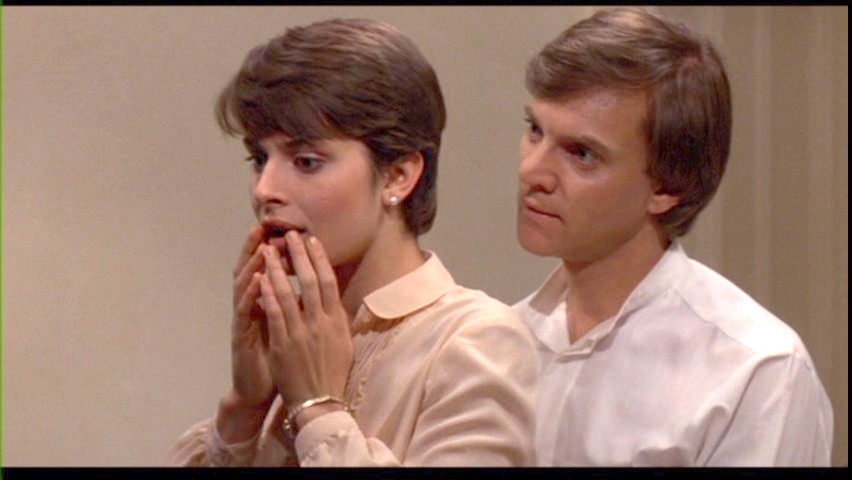
Nastassja Kinski & Malcolm McDowell in Cat People (1982).
Paul Schrader’s films have suffered somewhat unfairly in their critical reception over the years because his reputation as the brilliant screenwriter of two classic Martin Scorsese films—Taxi Driver (1976) and Raging Bull (1980)—has raised unfulfilled and probably unreasonable expectations for his own directorial efforts. Cat People was not a box office success. This resulted in Schrader being pushed out of studio-financed work and toward the rocky shoals of independent filmmaking. (He has grabbed a lot of attention and raised some eyebrows for his latest project, The Canyons, a Kickstarter-funded mock-exploitation film due out next year, with a script by Bret Easton Ellis and starring Lindsay Lohan and porn star James Deen.)
Further complicating any clear-eyed appraisals of Schrader’s work is his vaunted renown as a trenchant film critic in his own right, in particular as the author of Transcendental Style in Film: Ozu, Bresson, Dreyer, a remarkable examination of the “Holy” in the filmmaking styles of the three European directors addressed in the book title. The study grew out of a thesis written at UCLA Film School, where Schrader received an MA after studying theology at Calvin College. He’d fallen under the spell and personal mentorship of famed New Yorker critic Pauline Kael. Because Schrader’s intellectual background precedes him, film scholars have sometimes been misled in their desire to find deeper layers of philosophical intent to his movies. (To which one wishes to add: Good luck deconstructing The Canyons.)
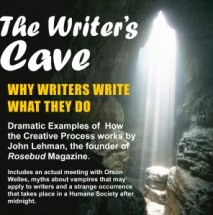
John Lehman’s The Writer’s Cave: Why Writers Write What They Do has seen several incarnations over the last few years. First as a two-part essay in Rosebud issues 39 & 40. Then as a two-person theatrical piece presented last year in Madison’s Frederic March Play Circle as part of the Wisconsin Book Festival. This summer Lehman went into a recording studio and produced an audio version of The Writer’s Cave, now available on CD. It’s Lehman’s own voice sharing his homebrew memoir and writer’s handbook, with fascinating forays into film criticism (touching on Orson Welles and Ingmar Bergman) and literary biography (about the great Wisconsin poet Lorine Niedecker).



 Coffee Spew