Coffee Spew

  • About
  • Cambridge Book Review
  • Cambridge Book Review Press
  • Selected Reviews

  • Crossroads

    Crossroads
    Jonathan Franzen
    Farrar, Straus and Giroux 2021

    Reviewed by Bob Wake

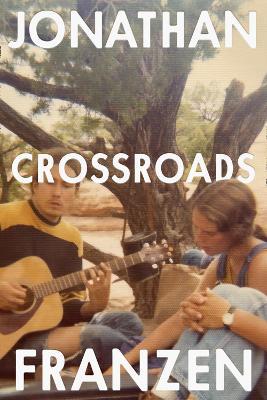
    At nearly 600 pages, Jonathan Franzen’s Crossroads reads like a binge-worthy premium cable series, complete with melodramatic cliffhangers between episodes. Chapters are composed in third-person intimate narration with POV alternating between members of the Hildebrandt family, parents Russ and Marion, and their four children, ranging in ages from nine to twenty. Russ is an associate minister at a church with a thriving youth group culture. It’s 1971 in the Chicago suburbs. The commingling of religion and politics is as vigorous on the antiwar left (liberation theology) as it is on the right. Crossroads is most assuredly a secular novel about religious faith and guilt, no less so than Nathaniel Hawthorne’s The Scarlet Letter (a novel winkingly alluded to in Crossroads, which isn’t without Franzen’s occasional metafictional side glances, up to and including Reverend Hildebrandt driving a Plymouth Fury wagon).

    The teenagers are well-drawn, if reminiscent, perhaps unavoidably, of influential television series like Freaks and Geeks and My So-Called Life. The failed HBO project that Franzen and filmmaker Noah Baumbach undertook ten years ago in trying to adapt Franzen’s more challenging novel, The Corrections, may have pushed the author in the direction of ruthless narrative momentum at the expense of literary experimentation. Crossroads is Jonathan Franzen’s most conventional novel to date, but his psychological realism remains as always acute. This is engaging storytelling that bodes well for further installments of what promises to be a trilogy of novels following one American family through the years. (Nine-year-old Judson’s “unhealthy absorption” with an eight-millimeter movie camera, for example, suggests there might be a grown filmmaker inhabiting a future volume.)

    October 8, 2021
    Crossroads, Freaks and Geeks, Jonathan Franzen, My So-Called Life, Nathaniel Hawthorne, Noah Baumbach, The Corrections, The Scarlet Letter

  • Harrow

    Harrow
    Joy Williams
    Knopf 2021

    Reviewed by Bob Wake

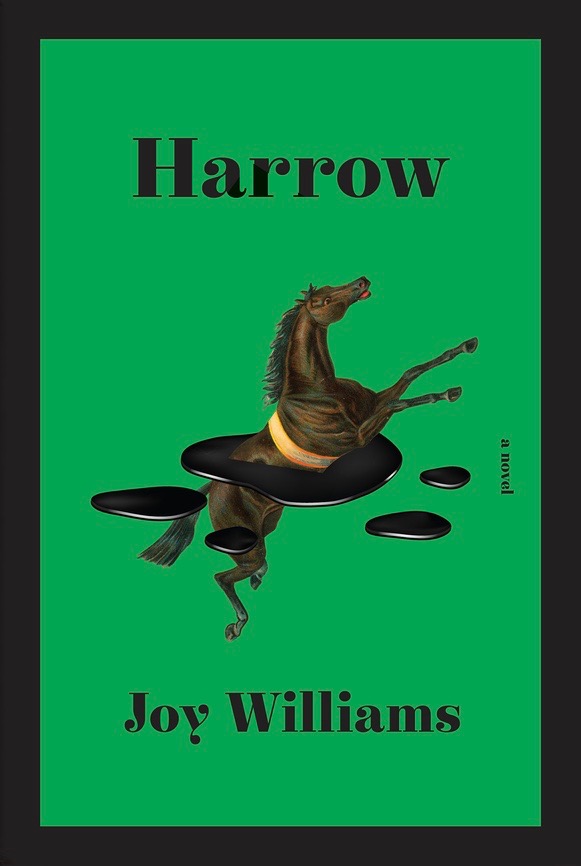
    A worthy addition to the genre of apocalyptic literary fiction. Joy Williams’s Harrow is no less nihilistic than Cormac McCarthy’s The Road, but much, much funnier. A train ride crowded with pompous sociologists on holiday is as zany as Preston Sturges. A chaotic bowling alley birthday party evokes the Coen Brothers. Like Pynchon or Tokarczuk, Joy Williams depicts alienation as a kind of absurd phantasmagorical quest. Add eco-terrorism and an epigrammatic flavor similar to the Kafkaesque fables in her collection, Ninety-nine Stories of God. (It’s no surprise that Kafka is name-checked and glossed at some length in Harrow.) An idiosyncratic near-masterpiece.

    October 1, 2021
    apocalyptic literary fiction, Cormac McCarthy, Franz Kafka, Harrow, Joy Williams, Ninety-nine Stories of God, Olga Tokarczuk, Preston Sturges, The Coen Brothers, The Road, Thomas Pynchon

  • Once Upon a Time in Hollywood: A Novel

    Once Upon a Time in Hollywood: A Novel
    Quentin Tarantino
    Harper Perennial 2021

    Reviewed by Bob Wake

    Dwight Garner’s cautiously laudatory New York Times review of filmmaker Quentin Tarantino’s epic 400-page novelization of Once Upon a Time in Hollywood gets it right: “If it were written better, it’d be written worse.” Tarantino’s novel is pulp fiction best appreciated as a companion text, or better yet, a skeleton key to the movie. Lots of riotous untold backstory of how Hollywood stuntman Cliff Booth (played by Brad Pitt in the movie) comes by his casual proficiency with ultraviolence. There’s a deeper dive into Manson Family dynamics, perhaps not as nuanced as Emma Cline’s The Girls, but no less chilling. The novel even has its own surprise ending that cleverly subverts the movie’s surprise ending. There are seedy detours into Hollywood lore, including a poignant depiction of alcoholic actor Aldo Ray’s decline. Most enjoyable is the book’s torrent of geeky motor-mouthing film criticism, similar in tone to the engaging program notes that the director has been penning in recent years since purchasing the New Beverly Cinema in Los Angeles.

    July 10, 2021
    Aldo Ray, Brad Pitt, Cliff Booth, Dwight Garner, Emma Cline, New Beverly Cinema, Once Upon a Time in Hollywood: A Novel, Quentin Tarantino, The Girls

  • The Recognitions

    The Recognitions
    William Gaddis
    NYRB Classics 2020

    Reviewed by Bob Wake

    I’m not ashamed to say I leaned heavily on Steven Moore’s indispensable online reader’s guide to William Gaddis’s The Recognitions. I consulted it often for navigational assistance and, frankly, comprehension. This will never not be a difficult novel. A daunting 956 pages, it was initially published to bafflement and poor sales in 1955, when Gaddis was thirty years old. The book is experimental in structure, scale, and execution. Its themes of greed, fraud, and spiritual exhaustion are set amidst a rapacious postwar consumer culture. The narrative encompasses madness, drug addiction, and sexual violence, as well as recurring parodies of cheerful radio commercials pushing pharmaceutical uppers (“Zap”), downers (“Necrostyle”), and contraception (“Cuff”). Gaddis briefly hung with the Beats in Greenwich Village. While The Recognitions isn’t a Beat novel, it shares the nascent counterculture’s mockery of authority and institutions. It’s also exhaustively allusive, like T. S. Eliot’s The Waste Land, piled high with references to classical art and literature, arcane myths, and religious rituals. There’s layer upon layer of erudition. 

    There’s slapstick. A buffoonish grifter disguising himself beneath an uncooperative toupee is pure Three Stooges. Or pure Thomas Pynchon, whom Gaddis would influence. The antihero of The Recognitions, a hapless art forger named Wyatt Gwyon, vanishes periodically from the kaleidoscopic narrative like Tyrone Slothrop in Gravity’s Rainbow, subsumed by historical forces greater than himself. (“A novel without a hero would be distracting in the extreme,” is a playfully metafictional remark from another character in The Recognitions.) Jonathan Franzen famously dubbed Gaddis “Mr. Difficult” in a 2002 New Yorker essay. Franzen courageously tackled The Recognitions on his own. (“The most difficult book I ever voluntarily read in its entirety.”) And while he ended up loving Gaddis’s novel—and even echoing it in The Corrections—he clearly struggled with it. “I read The Recognitions as a kind of penance, back in the early nineties,” he confesses. Given that Steven Moore’s Reader’s Guide first appeared in a print edition in 1982, it’s surprising that Franzen wasn’t familiar with it, or chose not to seek it out. Moore’s scholarly annotations are a masterful achievement in their own right.

    March 8, 2021
    Gravity's Rainbow, Jonathan Franzen, Mr. Difficult, Steven Moore, T. S. Eliot, The Corrections, The Recognitions, The Waste Land, Thomas Pynchon, Tyrone Slothrop, William Gaddis, Wyatt Gwyon

  • A Swim in a Pond in the Rain

    A Swim in a Pond in the Rain: In Which Four Russians Give a Master Class on Writing, Reading, and Life
    George Saunders
    Random House 2021

    Reviewed by Bob Wake

    An unexpected delight. Sure to become a classic on the craft of short story writing. George Saunders’s discussions of the mechanics of seven Russian short stories (three by Chekhov, two by Tolstoy, and one each by Gogol and Turgenev, all included in the book) are so clear-eyed and openhearted as to be breathtaking. Additionally filled with revealing insights into his own idiosyncratic stories and his development as a writer. Jonathan Franzen attempted something similar in 2013 with The Kraus Project, his heavily annotated collection of essays by the Viennese satirist Karl Kraus. While Franzen’s autobiographical asides were disarming, the Kraus texts themselves were nearly impenetrable to modern readers. Not so with the Russian short stories collected here, which remain touchstones of high literary art, Shakespearean in their universality and timelessness.

    February 10, 2021
    A Swim in a Pond in the Rain, Anton Chekhov, George Saunders, Ivan Turgenev, Jonathan Franzen, Karl Kraus, Leo Tolstoy, Nikolai Gogol, Russian literature, The Kraus Project

  • Fake Accounts

    Fake Accounts
    Lauren Oyler
    Catapult 2021

    Reviewed by Bob Wake

    The engine for Lauren Oyler’s razor-sharp debut novel is revealed in the opening pages when the unnamed narrator makes an unexpected discovery: “My boyfriend was a conspiracy theorist.” Like the McCarthy era dissected in Philip Roth’s I Married a Communist, Oyler’s narrative is a deep dive into another equally destabilizing period in American history: the beginnings of the Donald Trump presidency in 2017. Addiction to social media is a central theme, for sure, but Oyler’s already notorious career as a take-no-prisoners literary and cultural critic ensures that every essayistic detour and aside in Fake Accounts is freighted with brilliance and wit. Lorrie Moore seems a clear influence here, especially Moore’s darkly funny post-9/11 novel, A Gate at the Stairs (2009). Both novels feature a politically suspicious boyfriend and part-time jobs for their respective protagonists as nannies for a harried mother.

    February 9, 2021
    A Gate at the Stairs, Catapult, Fake Accounts, I Married a Communist, Lauren Oyler, Lorrie Moore, Philip Roth

  • The Outlook for Earthlings

    The Outlook for Earthlings
    Joan Frank
    Regal House Publishing 2020

    Reviewed by Bob Wake

    Melanie Taper and Scarlet Rand are Northern California-raised, self-searching, not always in sync, but supportive of one another since they were teenagers talking about boys and books at the school bus stop. Joan Frank’s ambitious new novel, The Outlook for Earthlings, is a puzzle-perfect narrative of interlocking flashbacks and flash-forwards, chapters qualifying and revising one another, circling elusive truths, charting the vicissitudes of Melanie and Scarlet’s decades-long friendship. Our perceptions and sympathies are jerked and jolted. Perspectives multiply. Consider a character’s anxiety when she ends a college affair with a married professor: “She felt like a cubist painting, pieces of her broken off and floating about the room. Mouth here, hand there, eyeball there.” The cubist dysmorphia foreshadows a medical illness.

    Friendship cannot function without a measure of confoundedness. Melanie might privately think of Scarlet, “Heavens, the woman wore her emotions like a sandwich board.” Scarlet, in an unkind moment, casts Melanie as a “docile homemaker” to Scarlet’s “globetrotting roustabout.” (Just as quickly, Scarlet retracts the labels as “vain, reductive.”) As a columnist for the Chicago Tribune, Scarlet lives her dream. Both women will eventually hold down unfulfilling jobs to make ends meet. Melanie Taper, one of the most enigmatic characters in recent fiction, becomes a prodigious autodidact:

    Mel knew all of Shakespeare, much of it by heart. She was reading Walter Benjamin, Nietzsche, Musil, Unamuno. She listened to postgraduate lectures on cassette while she drove to work: Philosophy of Religion, Foundations of Western Civ. She had lately told Scarlet, in perfect seriousness, she thought she should learn Italian so that she could read Montale and Morante in the original. 

    Melanie writes stories and novels and never seeks their publication. She’s preternaturally selfless in marriage and love. (“Subjugating oneself like some wretched servant” is Scarlet’s interpretation.) Melanie’s endlessly expanding and long-delayed graduate school thesis on Dostoyevsky’s The Idiot is conceived as a kind of emotional rescue of the epileptic Prince Myshkin. (“She felt this way about others, literary or real: poor Raskolnikov; poor Van Gogh. Somebody needed to make them some soup.”)

    Joan Frank has a painter’s eye for the natural world. (“The early sun struggled through the fog, a light of dirty wet coins.”) And a keen appreciation for the way our senses are assaulted by institutional spaces, such as academic administration offices. (“Smells of cleaning fluid, aging paper, bookbinding, overcooked coffee.”) The Outlook for Earthlings doesn’t discount the possibility of spectral visitations within the naturalistic confines of our world, but neither does it comfortably decipher them for us when they perhaps appear. The author’s tough-minded body of work, which includes numerous award-winning novels, short story and essay collections, has long refused to do the reader’s necessary work. Our task is clear. Each of us must answer for ourselves when this forceful and singular novel, arguably Joan Frank’s finest work to date, asks of us, “Did any ending ever befit the life it capped?”

    September 7, 2020
    California, Chicago Tribune, Elsa Morante, Eugenio Montale, Friedrich Nietzsche, Fyodor Dostoyevsky, Joan Frank, Miguel de Unamuno, Prince Myshkin, Raskolnikov, Regal House Publishing, Robert Musil, Sacramento, The Idiot, The Outlook for Earthlings, Vincent Van Gogh, Walter Benjamin

  • Mudstone: The Facebook Live Reading

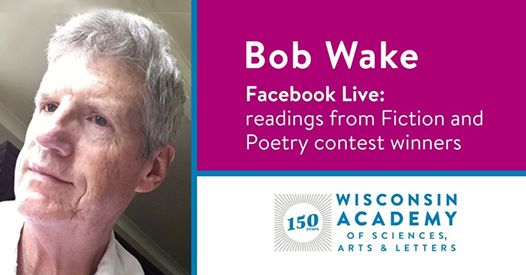
    I had the pleasure on July 30, 2020, of reading an excerpt from “Mudstone,” my first-place winning short story in the 2017 Wisconsin People & Ideas Fiction Contest, as part of a Facebook Live series hosted by the Wisconsin Academy of Sciences, Arts and Letters. The video is archived on their website here.

    FacebookLive.jpg

    August 11, 2020

  • Antkind

    Antkind
    Charlie Kaufman
    Random House 2020

    Reviewed by Bob Wake

    Antkind.jpg

    At 720 pages, Antkind succeeds as a large-scale comic novel. This is an impressive feat for a first-time novelist (albeit a first-time novelist who happens to be an Oscar-winning screenwriter). Line for line, page for page, Antkind is frequently deliriously funny. Kaufman’s 1990s TV scripts for comics like Chris Elliot are a clear influence. Antkind’s narrator and protagonist, B. Rosenberger Rosenberg, a self-important film critic, has the snotty arrogance that Elliot mastered so perfectly. Chris Elliot’s willingness to risk unlikeability is both his genius as a comic performer and probably his undoing with audiences (e.g. Cabin Boy). Charlie Kaufman seems to intuitively understand that an insufferable character is only as bearable as the jokes exposing the character’s pretensions and selfishness. Antkind has the jokes like Arby’s has the meats. As Kaufman has shown in his wildly inventive film scripts (Being John Malkovich, Adaptation, Eternal Sunshine of the Spotless Mind), he’s never met a meta gag that he can’t spin into comedy gold. Not unlike Martin Amis’s insertion of “Martin Amis” as a character in his novel Money, Antkind’s film critic is deeply hostile to the very real films of Charlie Kaufman (while extolling the more comfortably mainstream films, both real and imaginary, of Judd Apatow). Although the novel’s sci-fi trappings—time-travel and multiverses—seem at times like a lesser work by Philip K. Dick (name-checked in Antkind as an “American primitivist”), Antkind’s slapstick exuberance is like a live-action Tex Avery cartoon.

    July 16, 2020
    Adaptation, Antkind, Being John Malkovich, Cabin Boy, Charlie Kaufman, Chris Elliot, Eternal Sunshine of the Spotless Mind, Judd Apatow, Martin Amis, Money, Philip K. Dick, Tex Avery

  • The Unexploded Ordnance Bin

    The Unexploded Ordnance Bin
    Rebecca Foust
    Swan Scythe Press 2019

    Reviewed by Bob Wake

    Rebecca Foust’s The Unexploded Ordnance Bin is a ferocious work of poetry. The chapbook’s title and ominous cover design (by artist Lorna Stevens) connote urgency and dread. Its thirty poems, touching on a variety of charged topics and poetic forms, all share Foust’s fierce intelligence, sharpened wit, and an abiding reverence for the natural world and our place in it. The title poem begins like a Hitchcock movie about a family excursion that turns darkly comic with menace:

    our son found the hollow shell
    snub-nosed & finned
    & looking like an Acme cartoon bomb
    where we raked for clams
    he wanted to keep it
    & we wanted to let him

    unexploded

    An author’s note chillingly informs us that U.S. coastal regions “harbor millions of pounds of dumped munitions” from military training exercises. The family in the poem visits the local police station to dispose of the shell. The mother is left discomforted. A chain-reaction of metaphors follows. She is haunted by her son’s autism and wonders “what it would look like / the bin for safe disposal of genes / that can ruin children.” These lines pack the kind of gut-punch that Rebecca Foust’s work never shies away from. She has addressed her son’s autism in poems over the years, at times with grace and understanding, and at other times with cosmic fury.

    A triptych of poems, “spec house foundation cut into ridge,” “The Deer,” and “Vehicular” depict the effects of environmental and habitat destruction. Readers might be familiar with the experience of being behind the wheel of a car and striking a deer on a highway or rural road. “The Deer” slows down the moment of impact like a forensic examination of the Zapruder film:

    It came mid-sentence, the blow so nearly not a blow, the light
    shattered and flung into the fog, scattered shards
    blooming chrysanthemum then dissolving away,
    a Roman candle illuming the night

    In the poem titled “after the dream act is revoked,” the refrain of “what can i do” begins a process of assessing our privilege and our community (“the people / I know are mostly decent / if catatonic with abundance & consumption & god / & their screens”). The prognosis is grim: “when will we admit the pogrom is here.” Some of the strongest work in The Unexploded Ordnance Bin focuses on the human cost of our immigration policies. “Requiem Mass for the Yuma Fourteen” memorializes the fourteen Mexicans who died of exposure in 2001 while trying to cross the Arizona desert into the United States. The poem is a villanelle, a classic form distinguished by its incantatory repetition of phrases. The rigor of the form combines with Foust’s unadorned language to create a biblical evocation of grief. The opening three stanzas:

    Beyond the border they could smell the rain.
    It smelled like freedom. Freedom and home.
    The desert composes its requiem.

    The oldest was sixty, his grandson thirteen.
    One wore new jeans, one carried a comb.
    Beyond the border they could smell the rain.

    They got lost, then they lost their water. The sun
    was a furnace blast. Dust. Thirst. Delirium,
    the desert composing its requiem.

    As Foust showed in her 2015 book-length sonnet sequence, Paradise Drive, she is skillful at linking poems thematically. The third, and final, section of The Unexploded Ordnance Bin returns to family with a series of deeply personal poems on gender and identity charting her now-adult daughter’s transgender journey. “Shall I mourn one, seeing the other?” she asks in “Moon.”

    March 5, 2020
    2018 Swan Scythe Press Chapbook Award, Alfred Hitchcock, DREAM Act, immigration policy, Lorna Stevens, Paradise Drive, Poetry, Rebecca Foust, Swan Scythe Press, The Unexploded Ordnance Bin, transgender, Yuma fourteen, Zapruder film

Previous Page Next Page

Blog at WordPress.com.


Loading Comments...
 

    • Subscribe Subscribed
      • Coffee Spew
      • Join 55 other subscribers
      • Already have a WordPress.com account? Log in now.
      • Coffee Spew
      • Subscribe Subscribed
      • Sign up
      • Log in
      • Report this content
      • View site in Reader
      • Manage subscriptions
      • Collapse this bar