I love great beginnings. Take a look at the opening paragraph of Eudora Welty’s “A Visit of Charity” (from the Collected Stories), a wonderful story that famously was rejected 13 times by various magazines in the early 1940s, including The Atlantic Monthly and Ladies Home Journal. It was finally published in a small literary magazine for which Welty was paid $30. “A Visit of Charity” is about a hapless Campfire Girl hoping to earn a few extra merit points by making a perfunctory visit to a local retirement home.
It was mid-morning—a cold, bright day. Holding a potted plant before her, a girl of fourteen jumped off the bus in front of the Old Ladies’ Home, on the outskirts of town. She wore a red coat, and her straight yellow hair was hanging down loose from the pointed white cap all the little girls were wearing that year. She stopped for a moment beside one of the prickly dark shrubs with which the city had beautified the Home, and then proceeded slowly toward the building, which was of whitewashed brick and reflected the winter sunlight like a block of ice. As she walked vaguely up the steps she shifted the small pot from hand to hand; then she had to set it down and remove her mittens before she could open the heavy door.
One of the remarkable aspects of this passage, and indeed of the story as a whole, is the point of view employed by the author. We’re in the third person, of course, but note that Welty has chosen to dispense with any omniscience that might pull us comfortably into this girl’s state of mind and into the story. There’s a disquieting lack of empathy, seemingly on the author’s part. Yet, this emotional coldness is quickly established as the story’s central theme. Isolation, and images of isolation are reinforced throughout the paragraph. The day is cold. We’re on the outskirts of town. Moreover, the nameless girl (Marian, we learn shortly) is painted for us almost cruelly in terms of bland typicality. We’re told she’s wearing “the pointed white cap all the little girls were wearing that year.”
This young person clearly is no spirited free-thinker; even her walk is described as “vague.” She represents a sort of blindly dutiful, socially conditioned innocence. She is, in other words, ill-prepared for and blithely ignorant of the devastation of old age, of failing health, of loneliness and death, all of which are symbolized and foreshadowed in this opening passage by the image of a monolithic retirement home which Welty conjures as a kind of sinister internment camp. Not only does the ugly building resemble a “block of ice” in the harsh winter sunlight, but the “prickly dark shrubs” planted in front of the building suggest barbed wire.
You might think this sets the stage for a grim tale that sentimentalizes the elderly as oppressed victims of abuse and neglect. However, “A Visit of Charity” is in fact one of Eudora Welty’s masterful little black comedies. Dickensian sentimentality is nowhere to be found. The two old women upon whom the young girl attempts to impose her charity are bitter and mean-spirited. Old age isn’t merely an inconvenience for them, it’s a black hole of delusion and despair. The old women bicker among themselves, they whine and say hateful things to one another. The girl is mocked and insulted by them, treated with the same kind of indifference that the story seems to imply we collectively treat our elderly in and out of society. But Welty steers clear of easy symbols and this never remotely resembles a screed on the theme of ageism. Her adjectives set a tone of discomfort and unease. The implications are ultimately ambiguous, if deeply pessimistic. Youth and old-age alike seem unavoidably blighted by ignorance and folly.
Some commentators have seen the girl’s journey as a kind of allegory of a Persephone-like character descending into the underworld. The story ends with her outside of the retirement home biting into an apple, which has led others to see a biblical theme at work, of innocence tarnished and sent packing into the fallen world. Welty, who had little regard for academic critics—she was essentially self-taught as a writer—said the impetus behind the story was simply her own childhood memories of being creeped out by old ladies in retirement homes. She was being disingenuous, however, by that response. On other occasions she spoke of the care she took with every word in a story like “A Visit of Charity,” looking to bring out echoes of myths and fairy tales (the girl’s red coat, for instance) and biblical lore. Eudora Welty has been called a writer’s writer, in part, I think, because we as writers can learn so much from her work, from the choices she makes as a stylist and as a storyteller. Her best stories have a powerful impressionistic quality in which tone, imagery and character become indistinguishable from plot. “Action is character,” F. Scott Fitzgerald liked to remind himself.
Like many coffee spewers, we’re suckers for a new Diana Krall CD, even though her prolific output has been generally uneven since Live in Paris (2002). Her latest, Quiet Nights, is once again a fairly safe mix of songbook standards and soft-rock covers. Reconfiguring pop chestnuts as “jazz tunes” can be a tiresome gimmick to attract aging boomers. But it didn’t seem that way when Cassandra Wilson set the gold standard with her smokey version of “Last Train to Clarksville” on New Moon Daughter (1995). And Krall, to be fair, did fine by Billy Joel’s “Just the Way You Are” and the Bacharach/David “The Look of Love,” both of which show up on Live in Paris. Quiet Nights has three smooth-jazz makeovers, the Bee Gees’ “How Can You Mend a Broken Heart,” which didn’t much impress us, ditto another Bacharach/David tune, “Walk On By,” and—the album’s best cut—an unexpectedly beautiful cover of Paul McCartney’s “For No One.” Krall’s version is gorgeous, aided in no small part by legendary arranger Claus Ogerman, whose distinctively ethereal orchestrations were behind some of Sinatra’s best 60s work. Perfect for a Beatles tune, in fact, because Ogerman’s touch has an uncluttered elegance not dissimilar from that of George Martin’s. After listening to Krall sing “For No One,” we were inspired to dust off the Revolver CD and listen to McCartney’s original. Then we got caught up listening again to the entire epochal album (if not our favorite Beatles album, which most days is Abbey Road). As for Diana Krall, at the very least download “For No One.” Great song, so-so album.
Watch bookstore magazine racks or check online for the Spring 2009 issue of Rosebud. Included are the winning essay and four runners-up for the fifth biennial X.J. Kennedy award for creative nonfiction. ($1,000 first prize, $100 runners-up, plus publication in Rosebud.) I’ve had the honor of co-judging the last three contests with the magazine’s editor, Rod Clark. This year’s winner: Kim Garcia for “Water and What Contains It,” praised as “the luminous reverie of an expectant mother.” And feast your eyes on the vibrant psychedelia of featured Neenah, Wisconsin artist Bruce Bodden (that’s his work on the cover). Don’t miss Rod Clark’s piece on Bodden, “Mad Cows and Electric Trees.”
Blake Bailey’s new biography of John Cheever is receiving near-unanimous praise. (My copy arrived in the mail today from Amazon, but I’m determined to read Denis Johnson’s 2007 National Book Award-winning novel Tree of Smoke first.) Worth recalling for a moment is Bailey’s magnificent 2003 biography of Richard Yates, A Tragic Honesty. Yates yearned but never got to see any of his short stories published in the New Yorker. Cheever, of course, along with John Updike*, was a New Yorker mainstay for decades. Even the great Yates novel, Revolutionary Road, was a hard luck case: nominated for the National Book Award in 1961, it lost—along with Catch-22—to Walker Percy’s The Moviegoer. Yates believed his career was forever derailed by the loss. Asked once by a student if he really wanted the award, Yates replied: “Want it? Want it? Of course I wanted it. I wanted it so fucking bad I could taste it!”
*Updike, in what was apparently the final book review he wrote before his death, dissed the new Cheever bio as “a heavy, dispiriting read.”
Know where your writer’s confidence resides: within, not outside of you.
Every novel is a first novel in that it is unique and original unto itself and would not exist except for your tireless devotion, your loving desire to breathe life into this particular narrative. Know this: the story will find itself in the telling. The process will define the story, the weave, the recipe. Do not fear false starts and rewriting and undoings. What may not at first feel directed will ultimately reveal an organic pattern and design.
Disengage from daily anxieties and reinvent yourself in your work. The work should become a fulcrum of limitless freedom. Never view yourself as unworthy of the novel. The novel—the shimmering narrative you are birthing—is itself desirous of being worthy of you.
Prairie Fire Poetry Quartet: John Lehman, Robin Chapman, Richard Roe, Shoshauna Shy
Coffee Spew had a front row seat at Avol’s Books in Madison on March 12 for a reading by the members of the Prairie Fire Poetry Quartet: John Lehman, Robin Chapman, Richard Roe, and Shoshauna Shy. The night was dubbed Stage Left in honor of John Lehman’s new chapbook, Acting Lessons, recently published by the University of Wisconsin’s Parallel Press.
Enjoy these audio clips of the evening:
*
Abundance / Robin Chapman
Yes, write of it, here right now,
in the middle of winter, snow
pock-marked with tracks
of squirrels and the backyard rabbit,
mice that spiral the long grass
into nests, the pair of cardinals
who own the house and all the trees
surrounding it, the raccoon family
from the water drain at the end
of the block (their eyes gleam
through the sewer grate on cold
night walks) who stop on their own
nightly rounds to pour the feeder seed
down their throats, the housefinches
from the front porchlight, heads
soaked in berry-red, foraging leftovers,
the chickadees dry and two-note calling
in the arborvitae, finishing off from a claw
the single sunflower seed that each
takes to a branch: we are wealthy,
wealthy in the black oil of seed, the gold
of cracked corn, the brushy thickets
of security from cats, the abundant lives
of our neighbors.
Last night I heard the whistle of a distant train.
Today instead of going to work, I walk down
a block to talk with the garbage man who is
waiting inside his truck for the drizzle to let up.
It’s not one of those two-story, Frankenstein
giants with weightlifter arms that hoists trash
over its head to dump it with a grunt, but a
sports car-sleek garbage truck, flaunting sort-
at-the-curb bins that are politically correct. I’ve
the urge to break away from my life for a while.
And sometimes in the rain, strange alliances
are made.
At the next stop the driver shows me how to
lift a can—most are plastic now—and deposit
its bags of spilling guts, then swing it ‘round
and grab another to a banging beat. I put my
feet on the running board, he shifts the gears
and when he brakes, I play it solo. I catch the
rhythm. He nods. Garbage men are not the stuff
of TV shows, but that’s their mystique. They are
everywhere, unnoticed, but aware of everything.
From magazines we read to hair we’ve lost,
to the degree that our discarded underwear
is frayed.
They are anthropologists studying a world we
furnish with debris. They smell our smells, taste
what we taste, feel the cans and boxes that
contain the food that shapes our shapes. And
here’s my house. What waste our lives become.
Once I was in an experimental drama. Tom,
a mid-level accountant, and I played hobos. He
needed a release from the minutia of the “day
by day.” To prepare for our roles we went to the
freight yard. I was chicken, but he hopped into
the open yellow boxcar of a slow-moving train.
I never saw Tom again.
Imagine the tallest tree in a forest
and you looking past clouds and mountain peaks.
Grip like a hawk and breathe until you sense
the tree’s roots, trunk’s length, the sap
rising, and push off. Feel the top of your skull
pulled by a taut string into sky’s depths,
you shushing the wind; laugh in short bursts.
Fall and rise, ride to the knife-sharp edge of a draft,
giving the ride voice, calling you, you, and we
to anyone who could listen.
Believe you have a third eye, a space
sound rushes to like water from a pump.
Release that sound and draw lip-crisped
air past your teeth, form your abdomen
like the roundest of hills. Push your midriff
at the hard wood of your backbone, release,
letting an egg rest on your tongue
like the hollow space of a nest.
This is your sound. You are ready
to begin your first song.
Richard Roe’s books include Knots of Sweet Longing (Wolfsong Publications, 2001), What Will You Find at the Edge of the World (Fireweed Press, 2001), and Bringer of Songs (Fireweed Press, 1994).
*
Wife / Shoshauna Shy
He wanted to want her
but being able to have her
at any given time
diminished desire.
It was only in sleep he was aroused
as he tilted through dreams where she became
the Kwik-Trip cashier, Eddie’s sister-in-law
or the sub from sixth grade.
Her plumping of pillows, her mashing potatoes
sang of aprons and Mama and pink medicine
which left him as flaccid as a fish on a dock
till the evening he happened
to be hosing the begonias
while she was undressing
at their bedroom window.
Out of her slip he saw her shimmy,
spread her skirt on the wingback chair,
the parted lace curtains a picture frame
to their dark yard that fanned
like a bellows behind him.
He watched as she leaned
and brushed loose her hair,
then he raced inside ready
to shuck off his trousers.
Now she ponders why he disappears
following the finish of NewsLine at ten.
He claims he forgot to fertilize the roses.
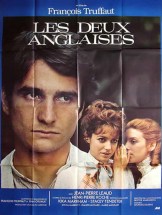
Our 2004 Cambridge Book Review Press translation of Henri-Pierre Roché’s novel Two English Girls and the Continent is available through Paypal and Amazon.
It was tremendously exciting acquiring translation rights for Two English Girls from Editions Gallimard and securing a first-rate translator in Walter Bruno. Graphic designer Spencer Walts, responsible for four of our books’ covers, came through aces, as well. And a shout-out to Tom Pomplun of Graphic Classics who gave me a crash course in the finer points of QuarkXPress for the book’s text layout.
On an evening in June 2004 we rented the Orpheum movie theater in downtown Madison and showed a 35mm print of François Truffaut’s film version of the novel. (The rich color print, the only extant copy in the U.S. from Fox Lorber/WinStar, was a revelation compared to the washed-out look of the DVD that’s in circulation. It was also longer by a couple of minutes. Two English Girls is overdue for a Criterion Collection restoration.)
I’d like to share a piece I wrote on the movie and book. It originally appeared online for culturevulture.net and was later revised and printed as program notes for the film showing:
~
Only in recent years has François Truffaut’s Two English Girls (1971) emerged as a noteworthy film. A critical and financial disappointment when first released, its two-hour and twenty-minute running time was subsequently trimmed by nearly half an hour. Truffaut restored the cut footage in 1984, shortly before his untimely death from a brain tumor at the age of fifty-two.
Initially, the movie was seen as little more than a failed distaff variation on the director’s much-admired Jules and Jim (1962). Both films were based on autobiographical novels written in the 1950s by septuagenarian art collector Henri-Pierre Roché (1879-1959), famed as the go-between who introduced Gertrude Stein to Pablo Picasso in Paris in 1905.
There are superficial similarities shared by Roché’s two novels. Both concern romantic triangles. In Jules and Jim, a Frenchman and a German are in love with the same free-spirited woman during the era of the First World War. In Two English Girls and the Continent, set several years earlier at the turn of the century, two sensitive English sisters engage in a complicated love affair with a callow Frenchman.
To paraphrase Tolstoy, every unhappy ménage à trois is unhappy in its own way. Roché’s respective threesomes are unique unto themselves, as are the narrative strategies he employs in each novel. Moreover, Truffaut himself significantly changed as a filmmaker in the decade that elapsed between the screen adaptations of the two books.
Jules and Jim was the director’s third feature, made when he was just turning thirty. Its success affirmed his growing stature as a key figure in the influential French New Wave film movement. A textbook of directing and editing ingenuity, Jules and Jim remains an exhilarating viewing experience. (A rare dissenter, critic Manny Farber, scorned Truffaut’s stylistic exuberance as “meaningless vivacity.”)
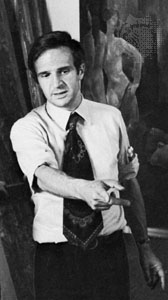
Truffaut directs Two English Girls (1971)
By 1971, the year Two English Girls appeared, the New Wave had lost its luster and cohesion. Once allies in shaking up the movie-making establishment, core New Wave members François Truffaut and Jean-Luc Godard had taken divergent career paths, reflecting larger cultural schisms then coming to the fore in Western Europe and the United States.
Godard embraced radical politics and underground filmmaking. Truffaut aimed his efforts toward increasingly mainstream fare, racking up ambitious flops and audience-pleasing hits in equal measure. Unnoticed, or at least unappreciated, during this period was the degree to which Truffaut’s themes were moving in the direction of darker complexities.
Where Jules and Jim was nimble on its feet and wistful, Two English Girls is somber and brooding. Gone are the emblems of Truffaut’s youthful audacity—the jump cuts, the freeze frames, the athletic handheld camera shots. In retrospect, it’s clear that Two English Girls has more in common with several stark Truffaut films whose protagonists are neurotically hamstrung and obsessed, movies such as The Soft Skin (1964), The Story of Adele H. (1975), The Green Room (1978), and The Woman Next Door (1981).
Never as popular as the director’s light-as-air soufflés like Stolen Kisses (1968) and Day for Night (1973), these challenging lesser-known titles have grown in reputation and come to represent for some critics, like David Kehr, the pinnacle of Truffaut’s work. The consensus on Two English Girls has changed markedly over the years. It is now routinely referred to as “one of Truffaut’s greatest achievements.” This of course begs the question: How to account for the film’s tepid reception in 1971?
While far from reactionary in tone, the film refuses to satirize or gild with irony its story of three characters whose behaviors are circumscribed by sexual repression. Truffaut neither ridicules the society in which the story unfolds, nor does he suggest that romantic love is perennially a victim of generational or institutional tyranny. (Unlike, say, Ingmar Bergman’s more astringent Cries and Whispers—released the following year—which scores forceful moral points against the same repressive patriarchal epoch as Two English Girls.)
Jean-Pierre Léaud and Stacey Tendeter
The film’s original audience was thus denied the kind of self-congratulatory counterculture critique so prevalent in the cinema of the 1970s. Instead, Two English Girls is a striking, if sometimes awkward, blend of fragile directorial restraint and surprisingly raw psychological intimacy. Perhaps out of sync with 1971, the film’s curious air of veiled hysteria seems more naturalistic than stilted today, and is perfectly suited—whether intentionally or not—to the nascent Freudianism of the story’s late nineteenth century milieu.
Nowhere is this felt stronger than the scene in which the character of Muriel (Stacey Tendeter) reveals with fetishistic severity her deep shame and religious guilt over being a compulsive masturbator since childhood. She directly faces the camera (and us) in a cold-eyed vérité monologue as she recounts explicit passages from her diary.
The faux documentary close-up accentuates Muriel’s punishing masochism. It also encapsulates the disillusionment of the film’s three central characters, Muriel, Anne, and Claude: the nearer they approach what they assume to be emotional truth, the deeper they are mired in paralysis and despair. Rather than an expression of emancipation or love, sexual passion in Truffaut’s Two English Girls is a death throe.
Roché’s novel, on the other hand, is less despairing than Truffaut’s often bleak adaptation. Not found in the book is the scene of aspiring art critic Claude (played with subdued grace by Truffaut’s familiar alter-ego, Jean-Pierre Léaud) taking the cruel step of publishing Muriel’s unexpurgated diary in Paris. While in the novel Claude is humorously self-regarding in his untested love for Muriel and Anne, it is Truffaut who instills the character’s potential for betrayal.
More controversial is the film’s tubercular death meted out to Muriel’s sister Anne (Kika Markham), a character who is alive and well and married at the conclusion of the novel. Truffaut has said he was inspired to fuse the lives of Muriel and Anne with those of the Brontë sisters. Anne’s death in the film, he claimed, was meant to parallel Emily Brontë’s 1848 death from consumption.
Directing Fahrenheit 451 (1966)
Pauline Kael, in her 1972 review of the movie, suggested a more startling impulse behind Truffaut’s decision: Muriel and Anne had come to be painfully associated in the director’s mind with yet another pair of real-life sisters—the actresses Françoise Dorléac and Catherine Deneuve—with whom Truffaut had worked and with whom he had love affairs. Dorléac died in an automobile accident in 1967 at the age of twenty-five. Deneuve broke off a relationship with Truffaut in the fall of 1970.
The long-awaited biography Truffaut (1999), written by Antoine de Baecque and Serge Toubiana, afforded a candid view of the director’s emotional state during the making of the film. Production began while Truffaut was under medical supervision, following his release from a psychiatric clinic where he was being treated for depression. (“The colors of my pills have become my only landscape,” he wrote to a friend at the time.) De Baecque and Toubiana contend that Two English Girls “can be read as the intimate journal of its convalescing director.”
Clearly, one’s admiration for the film ought not to be based solely on arcane knowledge of off-screen psychodramas surrounding the production. But consider this: it was François Truffaut who, as a film critic in the 1950s, coined the now familiar “auteur theory” with its proclamation that great movie directors bestow upon their work a distinctive and sacrosanct authorial voice. Is there any higher praise than to say that Truffaut’s melancholy soul haunts every frame of this strangely beguiling motion picture?
Not yet thirty years old, Jonathan Regier is a gifted, word-mad poet whose style owes as much to rock ‘n’ roll lyricism as to William Blake and Baudelaire. His debut collection, Three Years from Upstate (Six Gallery Press, 2008), blends bohemian wanderlust and religious allegory in a manner reminiscent of the Beats, which is not surprising for a writer born in Indianapolis and currently living in Paris. Regier is adept at portraying urban bleakness in “New York” (“Unctuousness of the subways, beyond midnight, / in the earliest morning, when the steel and plaster / Do their rotting …”), as well as pastoral beauty in “The Country” (“The stars are wild tonight, and the air is in frost. / I’m stepping on old pine cones through the snow”). There is large-scale ambition on display: Three Years from Upstate is distinguished by four long narrative poems, diverse in themes and imagery. Rabbit holes and parallel worlds abound, crumbling slums give way to hidden kingdoms, wooded farmlands trail off into haunted prairies. My favorite of the longer pieces is “The Hunting of the Beast,” a noirish murder mystery with Val Lewton overtones (“A large cat might have done it. A tiger. / The nearest zoo is so long away, it’s got to be a big dog. Possibly, / A bear”). Jonathan Regier is a poet to watch.
Mumbai-born novelist Salman Rushdie made news last week while speaking at Emory University in Atlanta. Story here and here. His remarks concerned recent movie adaptations of literary works. He hated Slumdog Millionaire (“patently ridiculous”) as well as its source, Vikas Swarup’s novel Q&A (“a corny potboiler”). Also in for a drubbing, The Reader (“leaden, lifeless movie killed by respectability”) and The Curious Case of Benjamin Button (“doesn’t finally have anything to say”).
No word on what he thought about two other literary adaptations from 2008, both of which I admired: Revolutionary Road, based on the great novel by Richard Yates (discerning movie-going friends concur that Kate Winslet’s performance was stronger here than in The Reader), and Elegy, based on Philip Roth’s novella, The Dying Animal. If you haven’t seen Elegy (beautifully directed by Isabel Coixet, best known for The Secret Life of Words and My Life Without Me), take a look and see if you don’t agree: Penelope Cruz, like Winslet, gives a stronger performance in a different 2008 film than the one for which she was nominated and won an Oscar.
Have you read it yet? The New Yorker this week is running an excerpt from a posthumous David Foster Wallace novel, The Pale King, unfinished but apparently several hundred thousand words in length, and slated to be published next year by Little, Brown. The excerpt is titled “Wiggle Room” and it’s vintage Wallace: an office drone named Lane Dean processes tax returns for the Illinois department of revenue in the 1980s. He watches the clock, shifts uncomfortably in his chair, his stream of consciousness parsing every tedious micro-moment. Lots of bureaucratic-speak and flurries of tax form numbers, somewhat in the spirit of Wallace’s ad agency short story “Mr. Squishy.” Lane is visited by a specter (think of those hospital room wraiths in Infinite Jest), a kind of etymology guru—“The man had on a headlamp with a tan cotton band, like some dentists wore, and a type of thick black marker in his breast pocket. He smelled of hair oil and some kind of food”—who proceeds to define in excruciating OED detail the origins of the word/concept “boredom.” Can’t wait to read more of this.
And in the same issue: don’t miss this extraordinary piece—the most complete yet—by D.T. Max on Wallace’s career and final days.











 Coffee Spew