Coffee Spew

  • About
  • Cambridge Book Review
  • Cambridge Book Review Press
  • Selected Reviews

  • Verse Wisconsin Publishers Lunch

    A terrific Saturday afternoon of good food and literary talk with small press publishers at Edenfred arts residency in Madison. The event was sponsored by Verse Wisconsin, a newly launched poetry magazine edited by Wendy Vardaman and Sarah Busse. The magazine is a reboot and redesign of Linda Aschbrenner’s much-admired Free Verse, which flourished for over ten years until Linda decided to pass the torch last year.

    Wendy Vardaman and Sarah Busse were kind enough to spend a few minutes talking with Coffee Spew at Edenfred about their co-editorship of Verse Wisconsin:

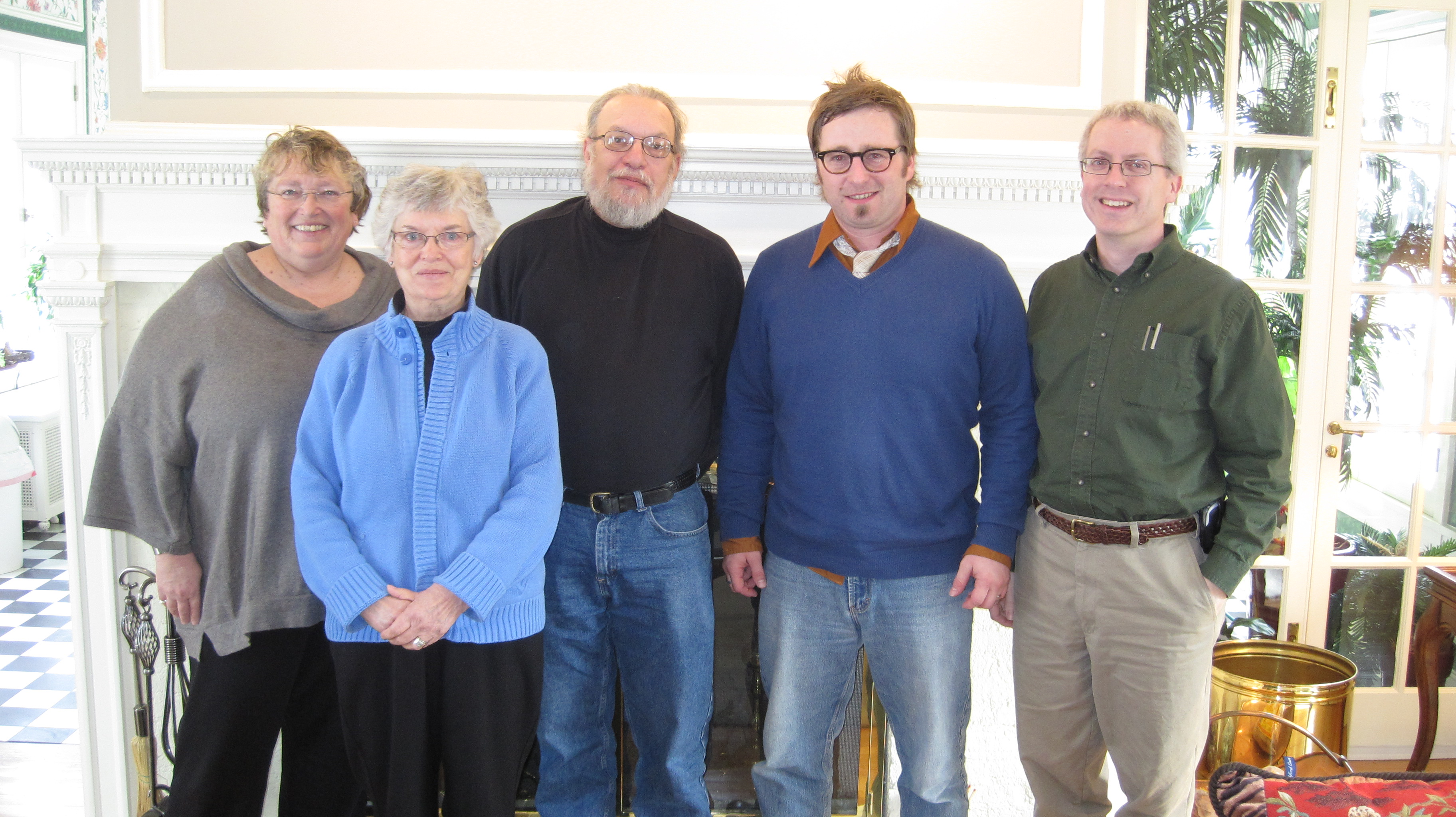
    Thanks is due Edenfred executive director David Wells for preparing a startlingly upscale gourmet lunch. See below for photos of the attendees:

    Left to right: Jerry and Paula Anderson (Echoes), B.J. Best (Arbor Vitae), Sarah Busse (Verse Wisconsin), Rod Clark (Rosebud), John Lehman (The Village Poet).

    Left to right: Linda Lenzke (Our Lives), Jeri McCormick (Fireweed Press), Ralph Murre (Little Eagle Press), Charles Nevsimal (Centennial Press), Erik Richardson (Signs and Wonders).

    Left to right: Wendy Vardaman (Verse Wisconsin), Lester Smith (Popcorn Press), Shoshauna Shy (Poetry Jumps Off the Shelf), F.J. Bergmann (Mobius), Jason A. Smith (Wisconsin People & Ideas).

    March 20, 2010
    Arbor Vitae, B.J. Best, Centennial Press, Charles Nevsimal, Echoes, Edenfred, Erik Richardson, F.J. Bergmann, Fireweed Press, Jason A. Smith, Jeri McCormick, John Lehman, Lester Smith, Linda Aschbrenner, Linda Lenzke, Little Eagle Press, Mobius, Our Lives, Paula Anderson, Poetry Jumps Off the Shelf, Popcorn Press, Ralph Murre, Rod Clark, Rosebud, Sarah Busse, Shoshauna Shy, Signs and Wonders, The Village Poet, Verse Wisconsin, Wendy Vardaman, Wisconsin People & Ideas

  • Inside, Outside, Morningside

    Inside, Outside, Morningside
    Marjorie Kowalski Cole
    Ester Republic Press 2009

    Reviewed by Bob Wake

    Alaskan poet Marjorie Kowalski Cole’s collection, Inside, Outside, Morningside, won me over on the first page in the concluding lines of “Desire”:

    The aspens shake in the wind
    like the bells of a prayer wheel.
    I would have what is within and without
    arrive at one still moment
    together.

    A rare balance is struck “within and without” that continues poem after poem. The natural world astounds (“Walk into the soft breeze and astonish your skin” runs a memorable line from “Mediterranean Evening”) while our fragile lives seem destined for departure and loss (“The young are strong enough; / We can go now,” she eulogizes in “Lessons Learned”). Cole’s Catholicism infuses these poems, an appreciation and thirst for the sacred. Our humanness doesn’t so much interfere as intermingle:

    In a blazing new parish in Fairbanks, Alaska,
    the one great room is white with light.
    It could be a dentist’s office: globes like snowballs
    press on my eyes, threaten to conquer sin with wattage.
    +++[“Light and Its Absence”]

    Her larger spiritual concerns are ecological:

    Gravel roads lead past tin warehouses, generations
    of derricks on their sides, earthmovers
    with outsize tires like herds of thirsty elephants

    I drop off the road and step across the tundra
    around fox shit, foam cups, crumpled packs
    of Camels, arrive to my surprise at a lake.
    +++[“Colleen Lake, Deadhorse, Alaska”]

    Themes coalesce around Cole’s multiple roles as mother, daughter, wife, world traveler, spiritual seeker and environmentalist. None of these categories are mutually exclusive. Connectedness is everything. She writes equally well and movingly of her mother’s illness, of art, of forest wildfires, of Ireland, Spain, Sweden. She returns again and again to nature’s healing harmonies, as in “Summer Night”: “Past midnight, the woods below those buttered treetops / are stirring with animals, wondrous with light.”

    The living world never fails to generate surprise, to snap us out of ourselves, our melancholy, our self-centeredness:

    I remember times of wailing
    into my couch, alone
    and utterly baffled by life,
    when suddenly a cat
    would be sitting on my head.
    +++[“Pushkin”]

    I was several poems into Inside, Outside, Morningside before I glanced at the back cover and learned of Marjorie Kowalski Cole’s death last year just as the book was going to press. She was in her mid-fifties. This graceful, luminous collection is a precious legacy. (Cole is also the author of a well-received 2006 novel, Correcting the Landscape.)

    March 16, 2010
    Correcting the Landscape, Ester Republic Press, Inside Outside Morningside, Marjorie Kowalski Cole

  • The Village Poet

    John Lehman, aka The Village Poet, has a new chapbook showing up around the Cambridge-Rockdale community. Free copies can be found just about everywhere, from the library to the state bank to the Piggly Wiggly. John says he’ll send out free copies to anyone interested, far and wide. Email name and address to John@VillagePoet.com.

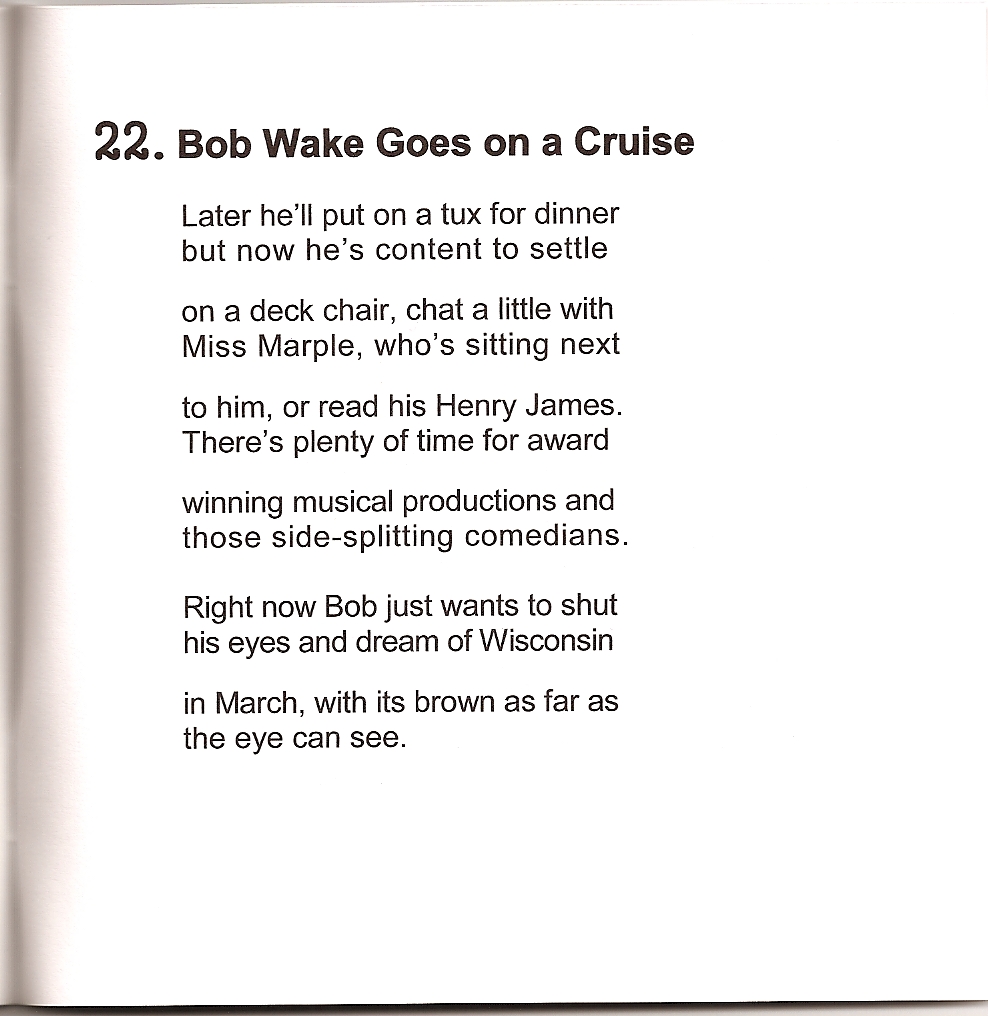
    Local residents abound throughout John’s work. I myself was honored to discover on returning home last year from a family vacation at sea that a commemorative poem had been issued. Reprinted below exactly as it appears in the Village Poet chapbook:

    March 5, 2010
    Bob Wake Goes on a Cruise, Cambridge-Rockdale Wisconsin, John Lehman, The Village Poet

  • Two CBR Press Works Cited

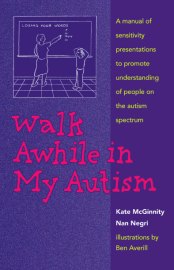
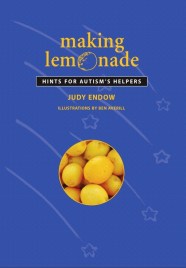
    A significant article in the latest issue of Disability Studies Quarterly, “Rethinking Autism: Implications of Sensory and Movement Differences” by Anne Donnellan, David Hill, and Martha Leary, cites two of our Cambridge Book Review Press titles: Walk Awhile in My Autism (2005) by Kate McGinnity & Nan Negri, and Making Lemonade: Hints for Autism’s Helpers (2006) by Judy Endow.

    February 28, 2010
    Anne Donnellan, Cambridge Book Review Press, David Hill, Disability Studies Quarterly, Judy Endow, Kate McGinnity, Making Lemonade: Hints for Autism’s Helpers, Nan Negri, Walk Awhile in My Autism

  • Memories of Veep “Ted” Agnew

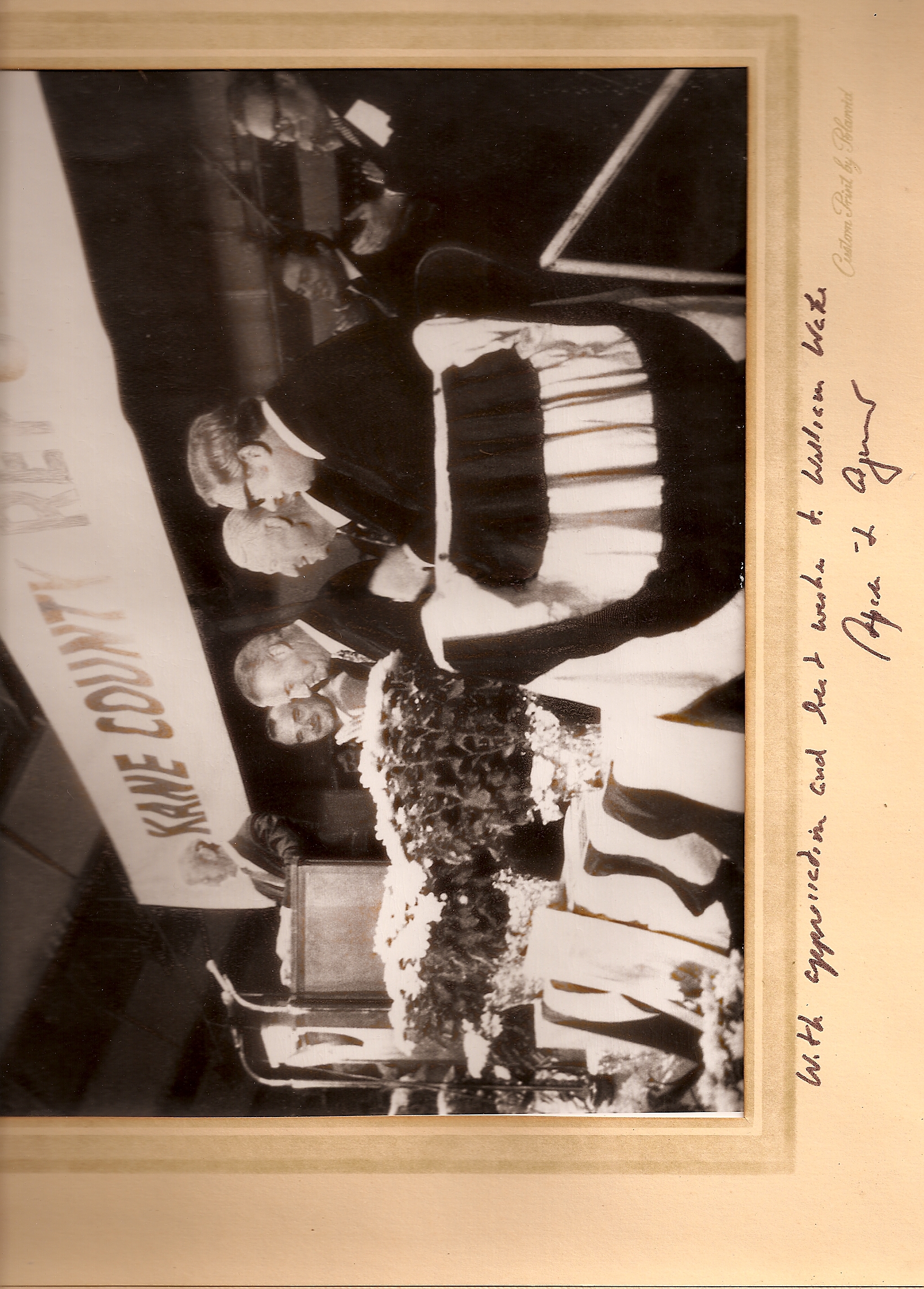
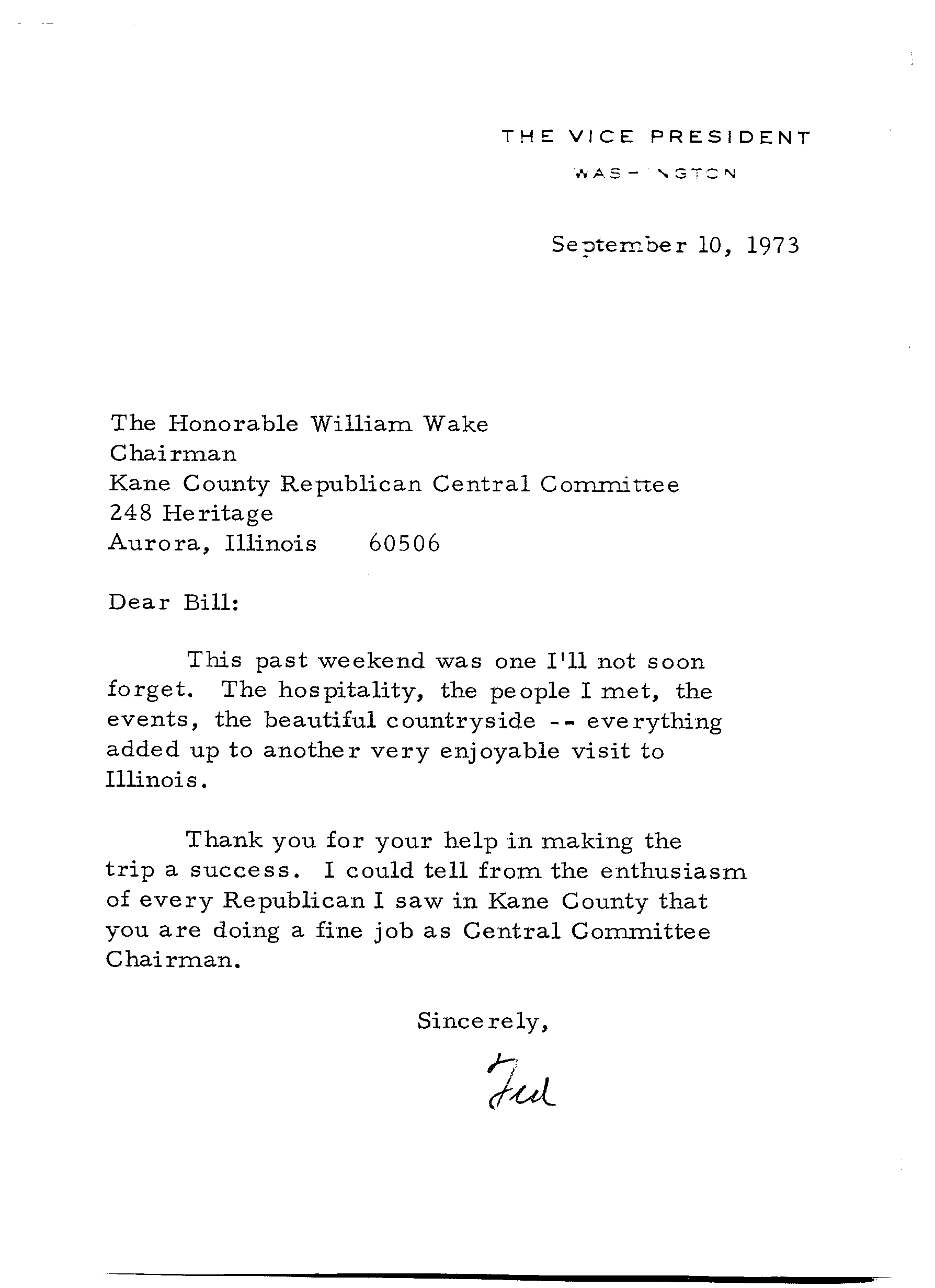
    We’re in the midst of basement renovations. Moving boxes out from behind the furnace, my son couldn’t get enough of an unsorted stash of my parents’ photos and memorabilia. He came up with a September 1973 signed thank-you note (boilerplate sentiments typed by a secretary) from then-Vice President Spiro T. Agnew. I’d forgotten about the letter. It goes with the inscribed 8×10 photo which has adorned our fireplace mantle for a while now. My father chaired the Kane County Republicans in the 1970s. Agnew was brought in for a fund-raising speech. (Dad is the guy sitting between Agnew and the podium.) Watergate was in the headlines and Agnew was under indictment in his home state of Maryland for graft. The event was held at the county fair grounds in St. Charles. There was a catered meal, a raffle. Some 2,400 attended. Columnist Joel Weisman, covering the speech for the Chicago Sun-Times, wrote “the vice president is not the same controlled, dynamic speaker he was before his personal grand jury problems became public in August.”

    February 28, 2010
    Chicago Sun-Times, Joel Weisman, Kane County Illinois Republican Party, Spiro Agnew

  • The Future of the Book

    Jason Epstein in The New York Review of Books assesses with guarded optimism the brave new world of digital literature:

    Digitization makes possible a world in which anyone can claim to be a publisher and anyone can call him- or herself an author. In this world the traditional filters will have melted into air and only the ultimate filter—the human inability to read what is unreadable—will remain to winnow what is worth keeping in a virtual marketplace where Keats’s nightingale shares electronic space with Aunt Mary’s haikus.

    February 24, 2010
    Jason Epstein, Keats, Publishing: The Revolutionary Future, The New York Review of Books

  • Faulkner’s Rosetta Stone

    According to a remarkable article in the New York Times, a nineteenth century Mississippi plantation diary turns out to have been a major source of background material and character detail for William Faulkner’s fiction:

    The original manuscript, a diary from the mid-1800s, was written by Francis Terry Leak, a wealthy plantation owner in Mississippi whose great-grandson Edgar Wiggin Francisco Jr. was a friend of Faulkner’s since childhood. Mr. Francisco’s son, Edgar Wiggin Francisco III, now 79, recalls the writer’s frequent visits to the family homestead in Holly Springs, Miss., throughout the 1930s, saying Faulkner was fascinated with the diary’s several volumes. Mr. Francisco said he saw them in Faulker’s hands and remembers that he “was always taking copious notes.”

    It’s being called “one of the most sensational literary discoveries of recent decades.” I know. Sounds like a Clifford Irving hoax, or something along the lines of the fake Hitler diaries. But it appears to be true. The Emory University professor and Faulkner scholar responsible for the discovery, Sally Wolff-King, has a book coming out in June from Louisiana State University Press, Ledgers of History: William Faulkner, an Almost Forgotten Friendship, and an Antebellum Diary. Material from the diary shows up in major works from The Sound and the Fury to Go Down, Moses and Absalom, Absalom!

    [Update: Explosive allegations in an April 24, 2014 article at the Awl.com suggest Ledgers of History might be a hoax.]

    February 19, 2010
    Absalom Absalom!, Go Down Moses, Ledgers of History, Sally Wolff-King, William Faulkner

  • Nominated for the Wrong Performance

    Farmiga in Orphan

    Time once again for Coffee Spew’s annual Nominated for the Wrong Performance award, which singles out an actor who in the previous year gave a better performance in a different film than the one for which they’ve been Oscar-nominated. (Previous winner was a tie between Kate Winslat, who was so much better in Revolutionary Road than The Reader, and Penelope Cruz, who gave a richer performance in Elegy than Vicky Cristina Barcelona.) This year’s winner is Vera Farmiga, wrongly nominated for Best Supporting Actress for Up in the Air instead of Best Actress for her harrowing work in Orphan. Farmiga’s sexy-cool femme fatale in Up in the Air is really more of a plot contrivance than a believable character. (I don’t know about you, but I felt cheated by the “surprise” revelation of her character’s duplicity and the manner in which the film invited us to scorn her.) Farmiga in Orphan, on the other hand, is simply astonishing playing a recovering alcoholic mother and wife whose grip on reality grows slimmer by the minute.

    February 12, 2010
    Elegy, Kate Winslat, Orphan, Penelope Cruz, Revolutionary Road, The Reader, Up in the Air, Vera Farmiga, Vicky Cristina Barcelona

  • J. D. Salinger (1919-2010)

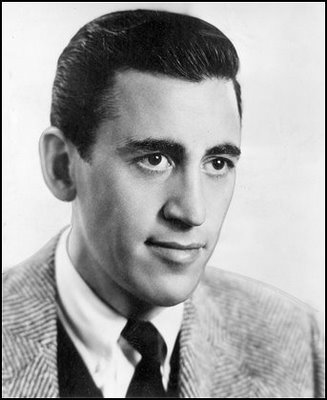
    The best appraisal I’ve read of Salinger’s legacy is Walter Kirn’s tribute in the February 18th issue of Rolling Stone. Kirn writes that Salinger “single-handedly invented the great American teenager” with the character of Holden Caulfield in The Catcher in the Rye (1951). And this is perfect: “As a model for genuine rebellion, Holden has always been overrated. He’s more like the kid who makes rebellion unnecessary by rendering grumbling and snickering sufficient.”

    Also essential reading is Lillian Ross writing about their long friendship in the February 8th New Yorker. She quotes Salinger: “I started writing and making up characters in the first place because nothing or not much away from the typewriter was reaching my heart at all.”

    As for the “dark side” of J. D. Salinger, look no further than Gay Davidson-Zielske’s review of Joyce Maynard’s 1998 memoir, At Home in the World.

    February 5, 2010
    At Home in the World, Gay Davidson-Zielske, Holden Caulfield, J. D. Salinger, Joyce Maynard, Lillian Ross, The Catcher in the Rye, The New Yorker

  • Unpublished Vonnegut story

    kurt-vonnegutThe L.A. Times has a previously unpublished Kurt Vonnegut story, “Look at the Birdie.” Clever and polished (if dialogue heavy) with a couple of fun twists. Very Vonnegut, I’d say, mixing social satire and noirish pulp with a dash of Weird Tales horror. About a discredited psychotherapist using paranoid schizophrenics as “muscle” in a blackmail scheme. It’s the title story in a posthumous collection just out from Delacorte Press in hardback.

    October 19, 2009
    Kurt Vonnegut, Look at the Birdie

Previous Page Next Page

Blog at WordPress.com.


Loading Comments...
 

    • Subscribe Subscribed
      • Coffee Spew
      • Join 55 other subscribers
      • Already have a WordPress.com account? Log in now.
      • Coffee Spew
      • Subscribe Subscribed
      • Sign up
      • Log in
      • Report this content
      • View site in Reader
      • Manage subscriptions
      • Collapse this bar