Here’s a first look at our print ad for Fisherman’s Beach, the 1962 novel by Wisconsin author George Vukelich that Cambridge Book Review Press is bringing out in an ebook edition in the spring of 2012. Big thanks to graphic designer Dan Parent for creating the ad, and to photographer Thomas J. King for the photo of the lighthouse tower at Two Rivers, Wisconsin (the setting for Fisherman’s Beach). More of King’s striking Two Rivers photos will be included in the ebook. The ad will be appearing in the next issue of Rosebud, due out in March, along with an excerpt from the novel.
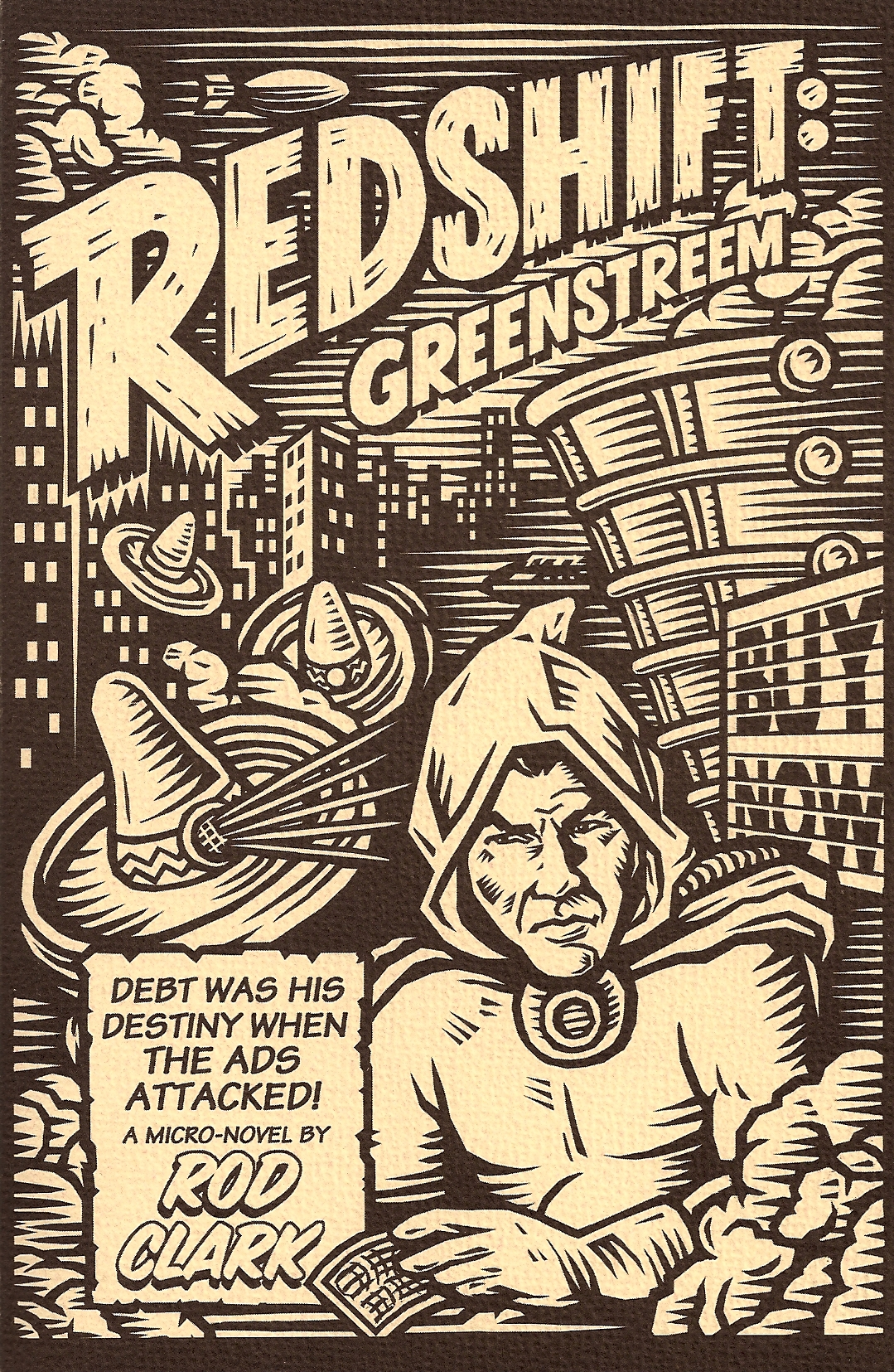
We’ve been alerted to some incisive remarks about Rod Clark’s Redshift: Greenstreem (now a CBR Press ebook) from writer and literary translator Brett Alan Sanders. The latest issue (51) of Rosebud includes an excerpt from Sanders’ translation of Passionate Nomads by Argentinian novelist Maria Rosa Lojo. Here’s what else Mr. Sanders found in Rosebud 51:
It also contains Appendix I and Appendix II from Clark’s science fiction “micro-novel” Redshift: Greenstreem, originally published in 2000 and just re-issued by the Cambridge (WI) Book Review Press. (It is available from the publisher and from amazon.com.) The book is being touted as “a minor cult classic,” and having just purchased and read a copy I can see why. It has much to say about the present economic crisis (about which it is highly prescient) and about the need for something like the Occupy Wall Street movement that is currently sweeping the nation. Say what you will about the merits of these occupations, the need for concern that they highlight—over the wildly increasing gap between rich and poor both at home and abroad—seems hard to seriously question. Maybe, by some creative mix of rhetoric and protest, we can still save our children and grandchildren from the ill fate prophesied in Clark’s dystopian narrative.
Sketch of poet John Lehman by artist Spencer Walts, from the back cover of Shrine of the Tooth Fairy.
We’re celebrating the release of the ebook edition of John Lehman’s poetry collection, Shrine of the Tooth Fairy, first published by Cambridge Book Review Press in 1998 with illustrations and cover art by Spencer Walts. John stopped by for coffee this morning and we recorded him reading from the collection. Here’s “Clark Street Rag”:
Clark Street Rag / John Lehman
On a night that shadows make tents
of backrooms a streetcar strums
past the cemetery
on the corner of Clark and Wilson
as Harold the Upholsterer
eyes a 1911 D penny,
the air in his shop suffocating
as a worn cushion—
dusty, warm, smelling of mold.
“I lost this,” he says and points
to a left ear chewed past the lobe,
“in a fight to a guy
who vomited so hard he died …
with the help of a pen knife.”
Floorboards creak in the vacant
apartment above.
Harold runs his thumb along the
counter’s glass edge.
He is a Pharaoh with a jeweler’s lamp
and the moon’s rays trapped
in his tomb.
“Four dollars.”
It twists from his mouth, a sound
like dry leather,
to the boy with an envelope
clutched in his hand.
And my heart plays banjo
to a city of small deals!
Spencer Walts illustration from Shrine of the Tooth Fairy.
John Lehman stopped by this morning for coffee and audio. We’re celebrating the release of the Kindle ebook edition of John’s poetry collection, Shrine of the Tooth Fairy, first published by Cambridge Book Review Press in 1998. The ebook includes Spencer Walts’s wonderful illustrations. Here’s John earlier today reading “Del’s Supper Club”:
Del’s Supper Club / John Lehman
They used to sit on car hoods
along the beach
or turn radio knobs and cigarettes
and watch the coil
of sun go out
and wait
for distant rumblings,
for the smell of lightning
from across the lake.
Now they applaud
tumbles
of liar’s dice
in a leather cup—
white shirt, short sleeved men,
who might sell appliances or tires
their wrist hairs coil
so smoothly
over chainlinked bands.
Laughter barks
from gesturing hands.
They caress a party glass
with a pin-up in a dress
that disappears
behind ice and gin
as the incandescent sign
through an open window’s screen
blurs
into a lipstick blot,
red taffeta,
eye glass frames of plastic bone.
They drift to midnights long ago
when bodies slid from clothes
and in the river glided over rocks,
their fingers slipping into moss,
while pines reeked, overripe
as rotting cantaloupe.
They hesitate,
alone,
at urinals,
with feet raised on rails at bars,
and in parking lots
at the door handles of their cars,
listening
to a green strand of neon
snap.


 Coffee Spew