
Beautifully written tribute to a beloved coonhound.
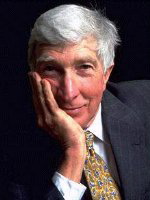
The last John Updike novel I read was 2006’s Terrorist. Creaky at times in its plotting, there was also something admirable and fresh in his striving to step inside and bring to life the consciousness of an eighteen-year-old American Muslim drawn toward committing a terrorist act. Less interesting were the novel’s other characters, particularly the high school guidance counselor, Jack Levy, who seemed too much a retread of those aging middle-class malcontents that Updike perfected long ago and about whom he apparently had nothing new to say. In other words, while I enjoyed the sheen of his trademark polished prose, it wasn’t a novel I recommended to friends or cared to review.
What I’ve read of his over the years, I most admired The Centaur (1963). It’s one of the richest literary evocations of adolescence. A standout scene has the youthful autobiographical protagonist hesitantly pulling off his shirt and revealing to a girlfriend the stigma of psoriasis on his arms and chest. Updike’s essay “At War with My Skin,” from his 1989 memoir Self-Consciousness, describes in unflinching, painful detail his lifelong struggle with psoriasis. While he sometimes seemed like a writer who hid behind his voluptuous style, at his best and sharpest he could harness his preternatural fluency in the service of hard emotional truth.
Not long ago I pencil-marked a soaring passage in an otherwise pedestrian short story, “Lunch Hour,” from Updike’s collection Licks of Love (2000). It’s about a high school reunion of oldsters. The prose comes alive in describing an autumn joyride in a Studebaker coupe through the Pennsylvania countryside circa 1948:
Little cemeteries of tilted sandstones, mysterious thick groves of planted evergreens, rickety farm stands that would have appeared deserted but for their fresh yellow squashes and orange pumpkins and the bonneted old woman keeping an eye on things from the porch; collapsing stone springhouses, the overgrown ruins of old iron forges, creeks making brown foam with their chuckling small waterfalls; fields of corn, of rye, of tobacco, of cattle, of peach and apple trees in blossom or bent low with fruit—all of this poured around the noontime travelers, who were oblivious to most everything but one another and the sensation of speed.
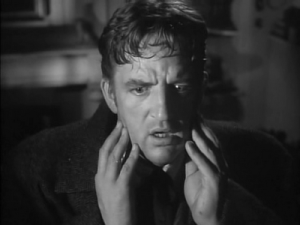
Wisconsin winters are a leveling force. Ground zero. Then there’s thirteen degrees below ground zero. Like today. The choice is clear: you can watch yourself go nuts, or, better still, you can watch a superb new DVD about a schizophrenic composer and let the guy in the movie go nuts. Hangover Square (1945) was the last film to star Laird Cregar, one of Hollywood’s great forgotten talents. He died, age 28 (or 31; his date of birth has been given variously as 1913 or 1916), while the movie was in postproduction. Weighing some 300 pounds in earlier roles, Cregar put himself on a crash diet (i.e., amphetamines) that resulted not only in his losing 80 pounds for Hangover Square but also brought on a stomach disorder, hospitalization, and finally a heart attack. Typecast once too often as an overweight psychopath, he yearned to unleash his inner matinee idol. Whether or not the sexually conflicted Cregar might have transformed himself into a proto-Montgomery Clift is anyone’s guess, but there’s no disputing the fact that few actors before or since have played an overweight psychopath with such soulful, wrenching menace and pathos. Film noir fans know him as the disturbed Inspector Ed Cornell in I Wake Up Screaming (1941). Horror buffs know his Jack the Ripper in The Lodger (1944). But nothing compares with Hangover Square. Cregar is George Harvey Bone, a frustrated composer of serious music (whose dissonant “Concerto Macabre” for piano and orchestra was written for the movie by Hitchcock’s great film composer Bernard Herrmann). The story is set in fog-shrouded turn of the century London, a backlot cost-cutting decision that allowed for using the sets left over from The Lodger.
The psychotic sad sack Mr. Bone falls under the spell of a femme fatale music hall singer played by Linda Darnell. He also suffers blackouts that send him on murderous rampages, killing cats and antique dealers and anyone else who ticks him off. Hangover Square boasts at least two bravura sequences: Bone’s hauling a corpse up a ladder to the top of a massive Guy Fawkes Night bonfire, and the climactic performance of the Concerto Macabre with Bone madly pounding away at the piano with the concert hall engulfed in flames. It’s a potent metaphor for the artist’s imagination and the thin line between creativity and self-destruction. An inferno guaranteed to keep you toasty on the coldest of winter nights.
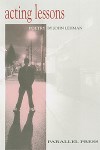
Our good friend, the poet and coffee spewer extraordinaire John Lehman, has a new chapbook of poetry, Acting Lessons, just out from the University of Wisconsin’s Parallel Press. It’s a rarefied honor for any writer to be included among the Parallel Press poets, a mark both of distinction and validation. Mr. Lehman has arrived, as they say. You can visit John online and sample his cinematic flare at Spanky and John Go to the Movies.

Bernhard Schlink’s slim, eloquent 1995 novel The Reader never quite came to life for me on the page, for reasons I couldn’t initially pinpoint. Yet, it is an experience that stays with one and, in retrospect, grows richer. A delayed reaction, if you will. Because the novel is so brief, it can feel attenuated and dramatically skimpy. I also wanted to blame the vagaries of reading a German novel in translation. Certainly, in the abstract, the plot is compelling. A fifteen-year-old schoolboy has a torrid summer’s affair with a thirtysomething woman in 1950s postwar Germany. The woman, Hanna Schmitz, lives in a coldwater flat and works as a streetcar conductor. She takes an interest in the boy’s schoolwork, especially his literature studies, and before long their lovemaking sessions never fail to include his passionately reading aloud to her from great novels and plays. The writing in this first third of The Reader is evocative and sensual. At summer’s end Hanna abruptly leaves town. The schoolboy, Michael, moves on with his life, eventually attending law school. The story at this point begins to feel less dramatic than schematic, an outline rather than a full-bodied narrative. Worse, I felt, a chilliness overtakes Michael’s narrative voice. As part of a university seminar, he and his classmates attend a Nazi war crimes trial in which several women are charged as former concentration camp guards. Michael discovers that Hanna is among them. The most horrific charge involves the guards having locked the doors of a burning church trapping several hundred women prisoners inside.
Hanna Schmitz is an ingeniously conceived character. Our sympathies, like Michael’s, remain deeply ambivalent. Midway through the novel, during the trial, we learn that Hanna is illiterate. The adult Michael resumes reading to Hanna via tape cassettes sent to her prison cell. She turns her cell into a classroom and teaches herself to read and write. We, as readers, are asked to consider to what extent an individual can be forgiven or redeemed. No convenient answers are provided. Schlink also raises larger questions of national and generational guilt.
My wrong-headed verdict upon finishing reading the novel: A book too slight and narrow in tone for the enormous historical atrocities it wants to illuminate. But the more I thought about it the more I realized that Michael grapples with similar questions as he narrates the novel, mentioning by name epic cathartic works of Holocaust literature like Sophie’s Choice and Schindler’s List (works which, he suggests, “supplement” and “embellish” our imaginations). We come to see that Michael’s emotions are shut down. He describes this dissociative state of mind perfectly in the novel (only later did I recognize that he was describing his own psychology and The Reader itself, the text itself):
All survivor literature talks about this numbness, in which life’s functions are reduced to a minimum, behavior becomes completely selfish and indifferent to others, and gassing and burning are everyday occurrences. In the rare accounts by perpetrators, too, the gas chambers and ovens become ordinary scenery, the perpetrators reduced to their few functions and exhibiting a mental paralysis and indifference, a dullness that makes them seem drugged or drunk. The defendants seemed to me to be trapped still, and forever, in this drugged state, in a sense petrified in it … Even then, when I was preoccupied by this general numbness, and by the fact that it had taken hold not only of the perpetrators and victims, but of all of us, judges and lay members of the court, prosecutors and recorders, who had to deal with these events now; when I likened perpetrators, victims, the dead, the living, survivors, and their descendants to each other, I didn’t feel good about it and I still don’t. [The Reader, p. 103.]
The movie version of The Reader works reasonably well. David Hare’s screenplay is faithful to the novel. Kate Winslat portrays Hanna’s complexity with subtlety and precision. She’s less persuasive as the older version of Hanna, however, mimicking a kind of stereotyped oldster’s stooped shuffle. While Ralph Fiennes is technically perfect as the adult Michael—detached, emotionally blinkered—the actor has played so many similarly reserved characters that The Reader is typecasting of the blandest sort. Even as an ironic counterweight to the actor’s earlier brilliant turn as the sadistic Nazi Amon Goeth in Shindler’s List, his performance here never really seems to connect. (Fiennes still has the juice: witness his zany over-the-top mob boss in In Bruges, released concurrently this year with The Reader. Fiennes gives a wonderfully dark and funny performance that personifies the sardonic heart of darkness at the of core of In Bruges bleak sick-joke universe.) Also note re: The Reader: Bruno Ganz as Michael’s law professor and Lena Olin as a camp survivor give strong, focused performances.
 Coffee Spew